Buyer guide
Medical device cleanrooms: writing ISO 13485 design inputs
Write the cleanroom requirements as design inputs tied to your product, your risk analysis and the rules of your market. FDA's summary of ISO 13485:2016 clause 7.3.3 says inputs must be complete, unambiguous, able to be verified or validated, and not in conflict, and the US QMSR that incorporates that clause took effect on 2 February 2026.
By ZY Cleanroom · Updated · Sources at the end of the page
What clause 7.3.3 asks for
FDA's training slides summarise the clause in five points. Keep records of the inputs. Cover functional, performance, usability and safety requirements for the intended use. Include applicable regulatory and standard requirements. Account for the outputs of risk management. Make every input complete, unambiguous, able to be verified or validated, and not in conflict with the others.
FDA's example is a device that must be portable. The weight was first written as 3 lb ± 1 kg, which mixes units. It was corrected to 3 lb ± 1 lb. A room brief has the same trap. If one page says ISO 7 and another says ISO 8, or one gives at rest and one gives in operation, the input is in conflict.
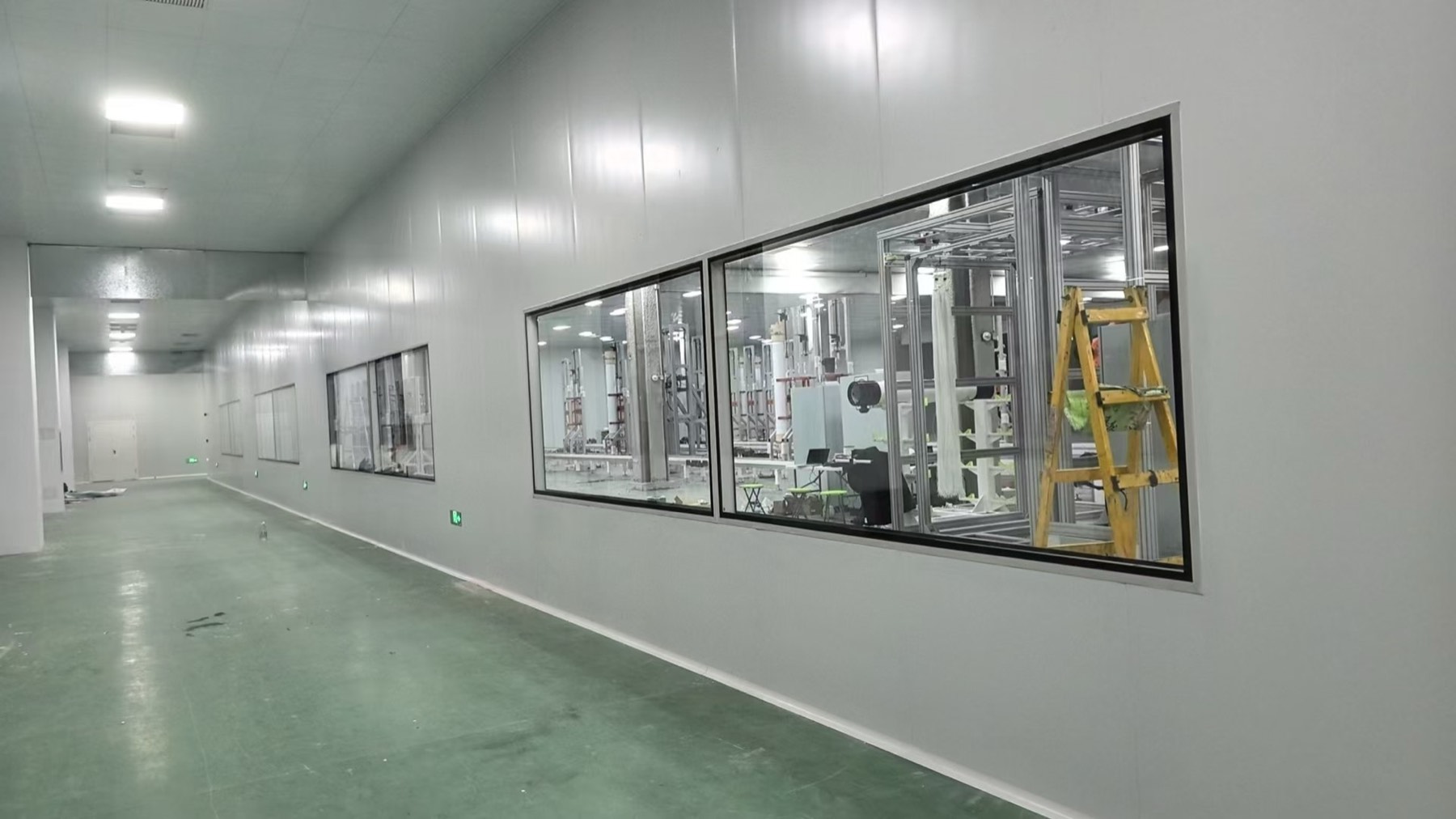
From product risk to room brief
The table is a suggested mapping, not text from the standard. The FDA slides give no particle limit for devices, so the class comes from your own risk file and market rules.
| Input source | Room requirement to write | How it is verified |
|---|---|---|
| Product risk, such as bioburden or particles | Class, with the occupancy state named | Classification test report |
| Regulatory rules of the target market | List of standards, with edition years | Document review |
| Risk management output | Pressure direction and alarm points | Pressure log and alarm test |
| Usability and process flow | Gowning route, material routes, airlocks | Walk-through of the layout |
| Safety of staff | Exits, lighting, cleaning access | Design review |
The rest of clause 7.3 in FDA's slides
Review (7.3.5): a suitable team reviews design results at suitable stages and records actions. In FDA's example, a review found a new use environment, and that produced a new input.
Verification (7.3.6) checks that outputs meet inputs: I made the device correctly. Validation (7.3.7) checks that the device meets its intended use on representative product, and it must finish before release.
Transfer (7.3.8) checks that outputs are suitable for manufacturing and that production capability meets the device requirements.
For a room, read it like this. The inputs are your room requirements. The classification test verifies the room against them. The transfer check confirms that the room can make the product. That mapping is a suggestion, not FDA's.
ISO class limits to quote exactly
FDA's 2004 guidance lists these limits for particles of 0.5 µm and larger per cubic metre (Table 1). EU GMP Annex 1 para 4.29 defines at rest and in operation for sterile drug rooms. Reuse that wording, or your own defined wording, so the state is clear.
| ISO class | Particles ≥0.5 µm per m³ |
|---|---|
| ISO 5 | 3,520 |
| ISO 6 | 35,200 |
| ISO 7 | 352,000 |
| ISO 8 | 3,520,000 |
Worked example (illustrative wording)
Final assembly room: ISO 7 in operation, not more than 352,000 particles ≥0.5 µm per m³. Pressure direction set from the risk file, with an alarm on the pair that protects the room. Classification tests carried out and reported before first production.
Annex 1 gives a guidance value of at least 10 Pa between rooms of different grade, but that is for sterile drugs. Do not copy it to a device room without a reason in your risk file.
If you have a room list for a device project, send it to ZY Cleanroom and we will review the panel, door and ceiling scope with you.
Questions
Common questions
When did the FDA QMSR take effect?
FDA's slides state 2 February 2026. It incorporates ISO 13485:2016, clause 7.3 on design and development, by reference.
Does FDA give a cleanroom class for devices here?
The slides give none. Set the class from your risk file and the rules of each market.
Which occupancy state should I name?
Name it in every input. Annex 1 para 4.29 defines at rest and in operation for sterile drug rooms.
Who keeps the design inputs?
Under clause 7.3 the device maker keeps the records. A contractor can turn the inputs into a room design.
Related guides
- ISO 7 and ISO 8 cleanroom requirements
- ISO 5 and ISO 6 cleanroom requirements
- HEPA filter integrity and leak testing
- Cosmetics factory rooms: what ISO 22716 and regulators say about premises
- Turnkey cleanroom contractor
- Room list builder
Sources
- FDA CDRH, Quality Management System Regulation (QMSR) - Design and Development (training presentation, undated; checked 1 November 2026)
- FDA, Guidance for Industry: Sterile Drug Products Produced by Aseptic Processing, Current Good Manufacturing Practice (September 2004, nonbinding; checked 1 November 2026)
- EudraLex Volume 4, Annex 1: Manufacture of Sterile Medicinal Products (published 25 August 2022, applied from 25 August 2023; checked 1 November 2026)
Project enquiry
Send what you have
A room list, a floor plan or only the floor area is enough to start. After you submit, send drawings by email or WhatsApp.
We reply by email within one working day. We can sign an NDA before you send drawings.
WhatsApp +44 7962 561184 is our UK number for export enquiries. The factory is in Tianjin, China.
Email: [email protected]
WhatsApp: +44 7962 561184