Semiconductor cleanrooms
Semiconductor cleanrooms planned around your tools.
Process bays, packaging and test rooms with air, floor and service routes laid out from your tool plan.
What matters
Designed around your process
- Raised floor and return air paths planned with your tool layout
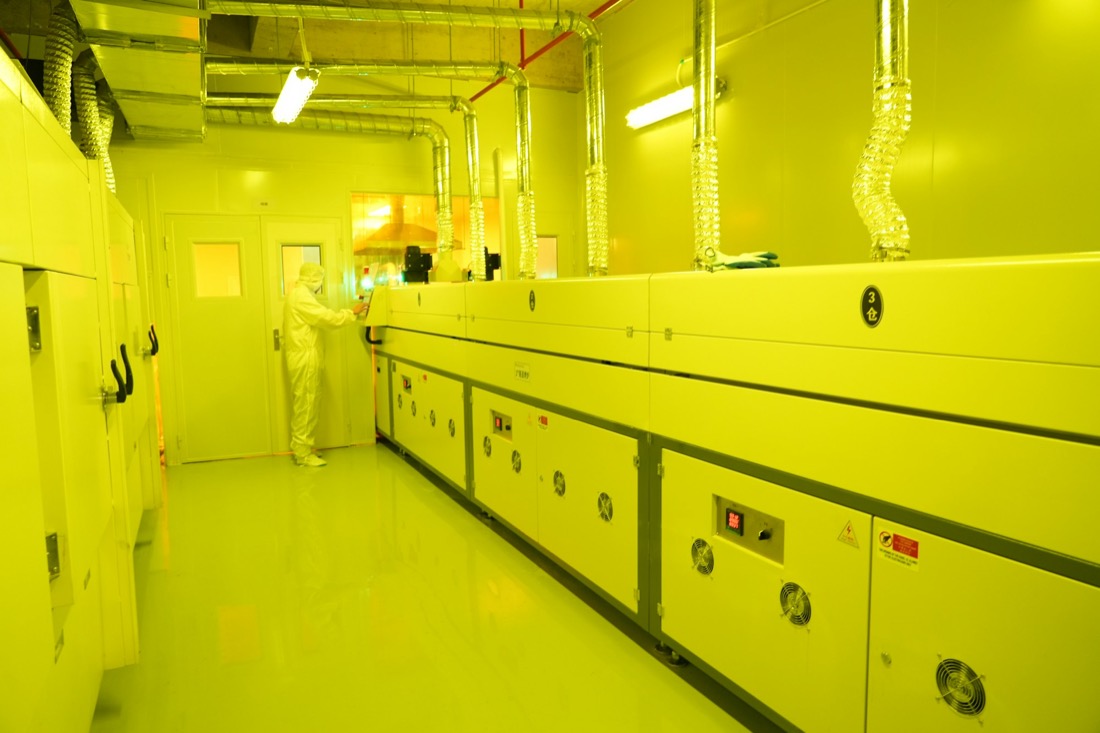
- Yellow lighting in lithography areas where your process needs it
- Temperature and humidity bands set with your process owner
- Service chases and tool hook-up space planned from the first layout
Rooms
Common room types
| Room | Common class |
|---|---|
| Process bays | ISO 4–6 |
| Advanced packaging | ISO 5–6 |
| Test and inspection | ISO 6–7 |
| Gowning | ISO 7–8 |
Typical classes, confirmed with your process, product and regulator. Sector photos are illustrative.
How your tool plan sets zones
A fab is drawn from the tool list. Each tool has a footprint, a service side, exhaust, gas and chemical lines, and a vibration limit. Decide which tool sides face the clean bay and which face the service area. The class is set per process step by your process owner and tool makers. No single number fits a whole fab. Mark every room that needs gas, chemical or exhaust lines.
ISO 14644-1:2015 classifies air by particles from 0.1 µm to 5 µm. ISO lists it as reviewed and confirmed in 2021.
Typical room list
We give no fixed class here. Each room takes its value from your process and tools.
| Room | What sets the requirement |
|---|---|
| Process bay | Tool maker data and your process |
| Lithography bay | Light spectrum checked against your resist |
| Gas and chemical rooms | Leak warning and detection, GB 50472 clause 12.3 |
| Test and packaging | Product specification |
| Gowning | Pressure step to the bay |
Rules and standards that apply
ISO 14644-1 states it does not cover the chemical nature of particles. ISO 14644-8:2022 grades air by chemical concentration, and replaced the 2013 edition. SEMI S2 (revision 0724E, SEMI store) is the safety guideline for equipment used to make, measure, assemble and test semiconductor products. GB 50472-2008 asks for gas leak warning devices where combustible, explosive and toxic gases are stored and distributed (12.3.6). It has a micro-vibration chapter with example values for precision tools (chapter 15, Appendix C). Your regulator approves your facility.
Common design mistakes
Assuming yellow light is safe. A 2025 study in Applied Science and Convergence Technology tested resist film under yellow light. One system still passed enough UV to develop the resist.
Using particle class as the only measure. It says nothing about chemical contamination.
Leaving vibration until tool install. Set the limits at layout stage, from your tool makers' data sheets.
What to send for a scope
Send the tool list with footprint, weight, heat load, exhaust and vibration limit. Add the class per process step, the chemical and gas list, any chemical contamination limits and the expansion plan. Say which bays use lithography.
Questions
Common questions
Which ISO class does a wafer fab need?
There is no single class. It depends on the process step and tool. ISO 14644-1 classifies from 0.1 µm up to 5 µm, so it can describe tight bays. Your process owner sets the number.
Does particle class cover chemical contamination?
No. ISO 14644-1 does not cover the chemical nature of particles. ISO 14644-8:2022 grades air by chemical concentration.
How do I check that yellow light is safe?
Check the lamp spectrum against your resist data sheet. Then test with resist film, as the 2025 study did. Colour alone does not prove safety.
Sources
- ISO 14644-1:2015, scope and status (Standards Council of Canada listing)
- ISO 14644-8:2022 listing (Genorma)
- SEMI S2, SEMI store
- GB 50472-2008 (English translation, ChineseStandard.net)
- Pyun et al., Photoresist-Based Evaluation of Ultraviolet Exposure under Yellow Lighting in Academic Cleanrooms, Applied Science and Convergence Technology 34(3), May 2025
Standards
Designed to ISO 14644 requirements
We design and build to the standard your project specifies. Finished rooms are tested against the agreed ISO 14644 class. CE-marked and FM-approved panels can be supplied for projects that require them, and other product certification can be arranged for your project. Independent third-party room testing can also be arranged.
On site
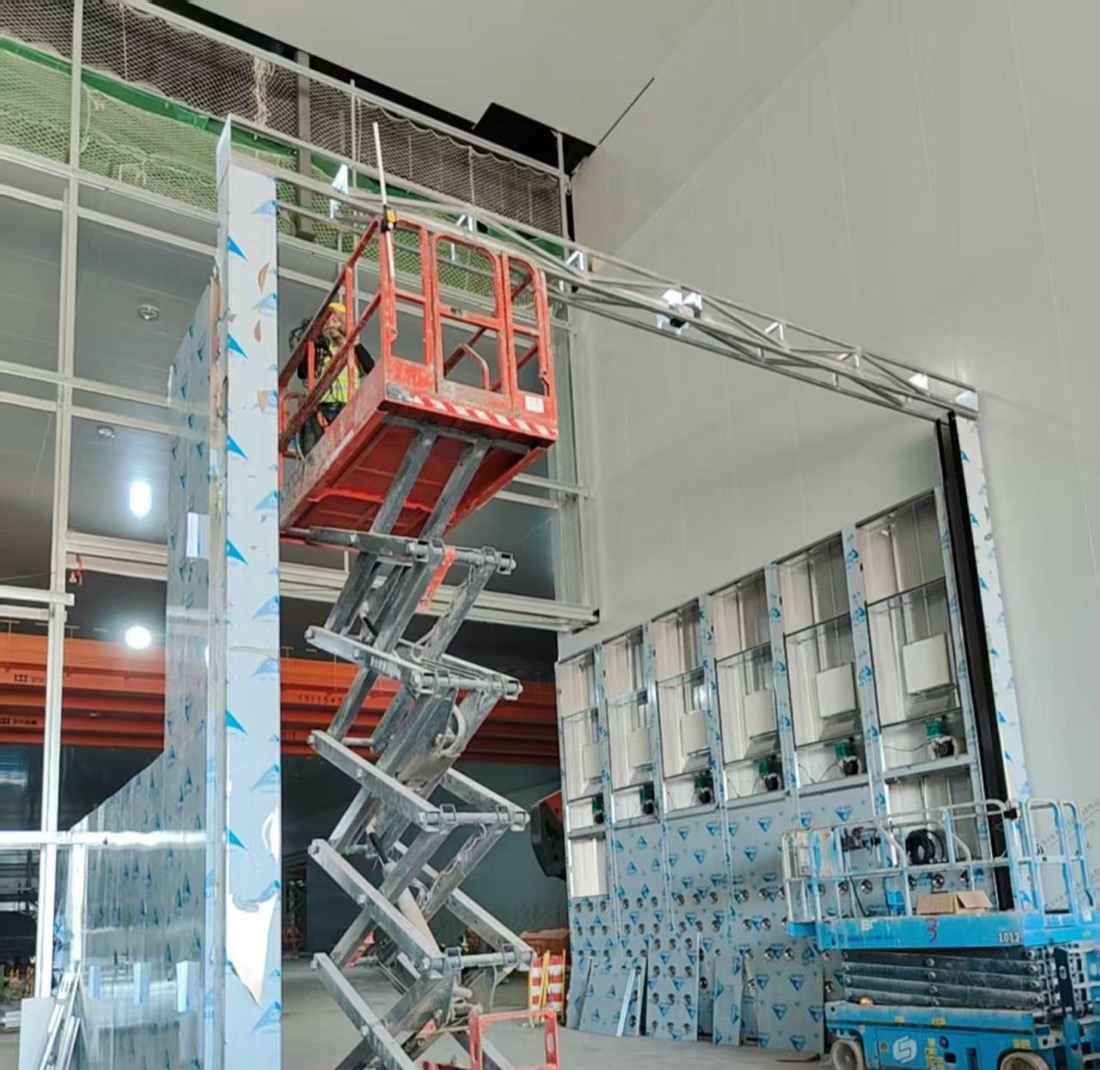
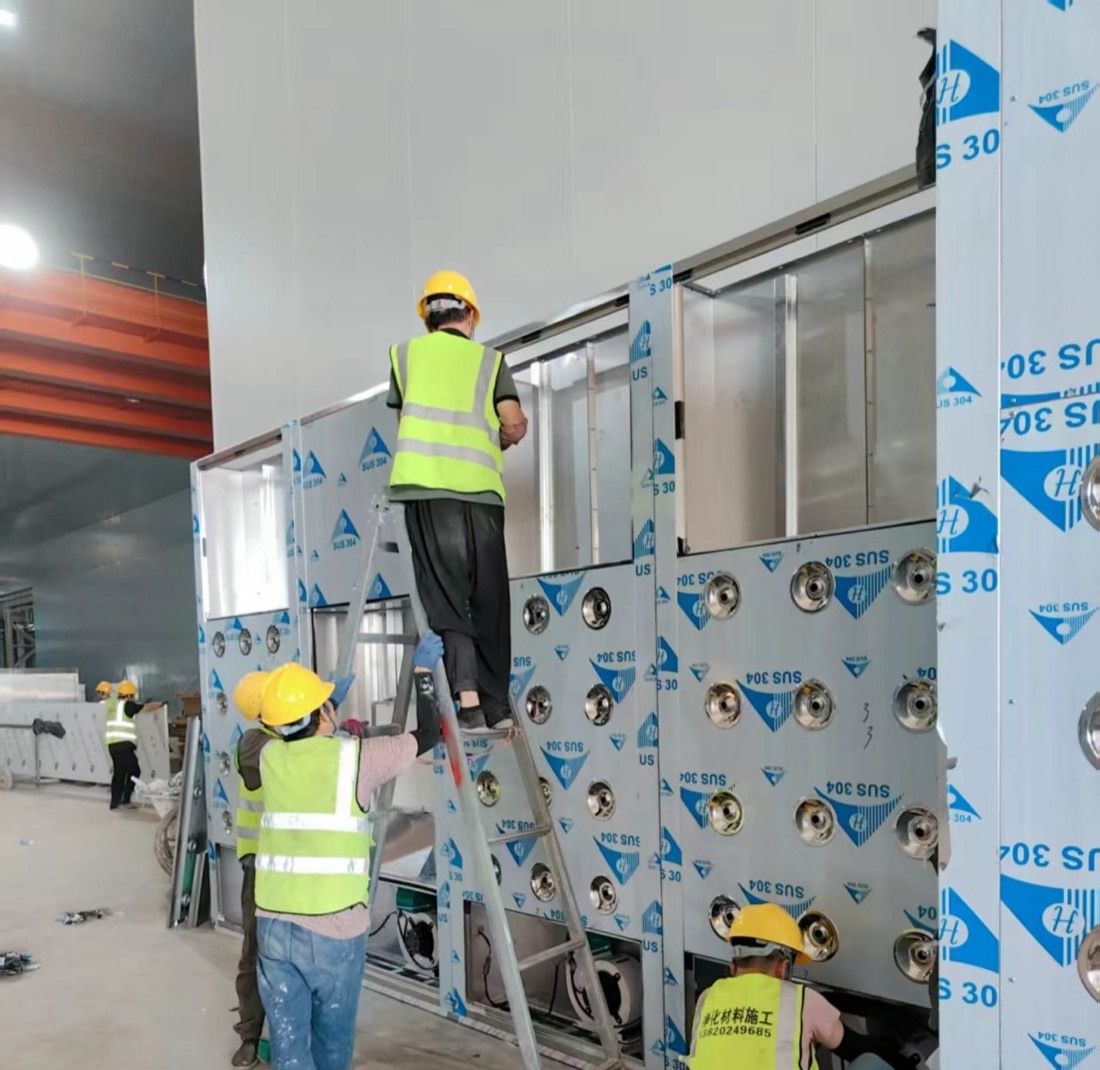
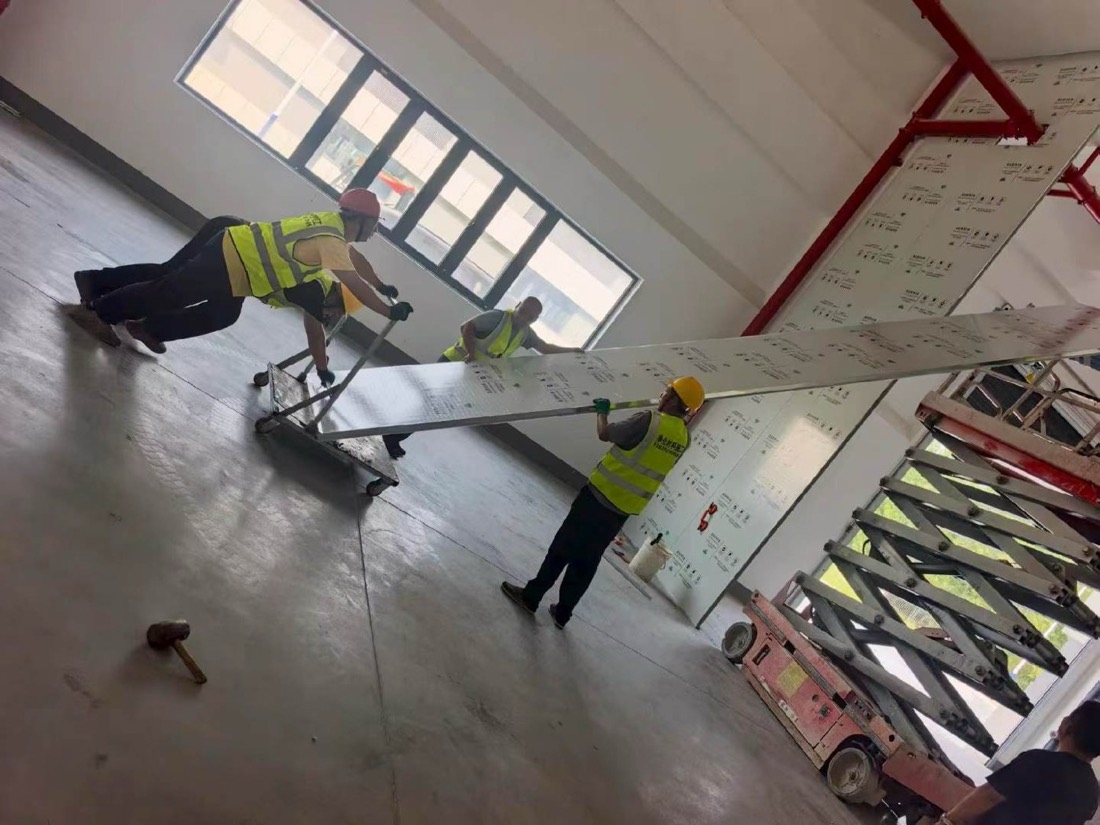
Our crews at work
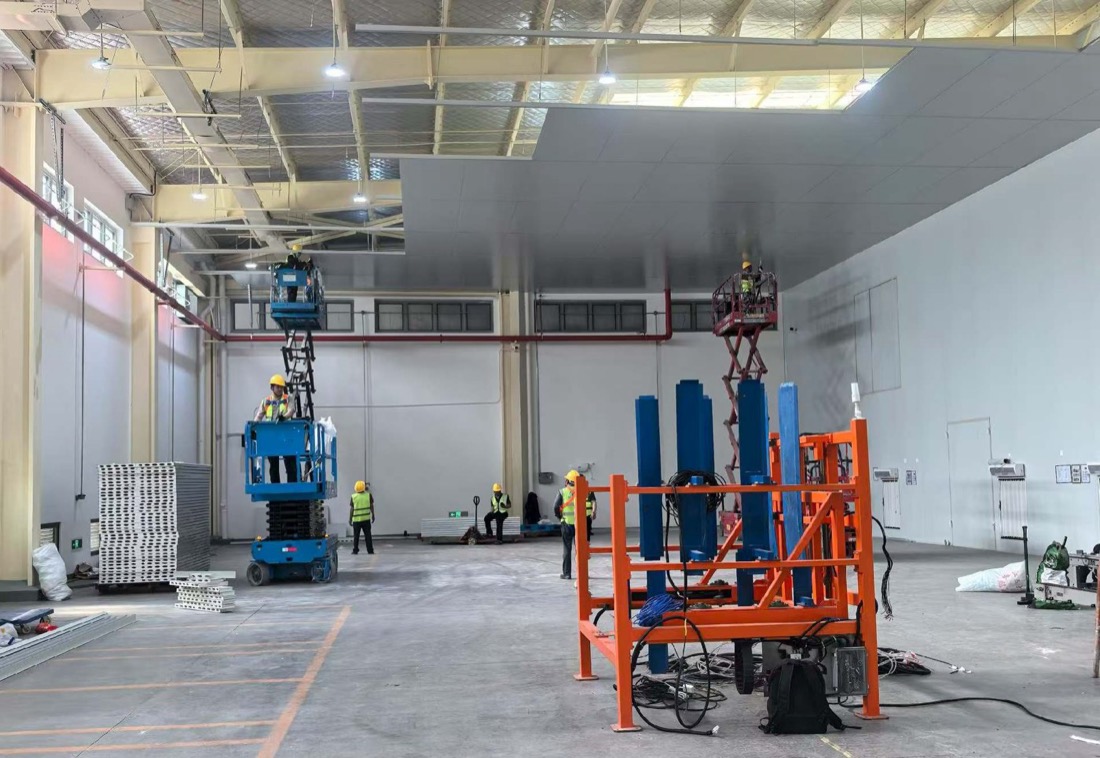
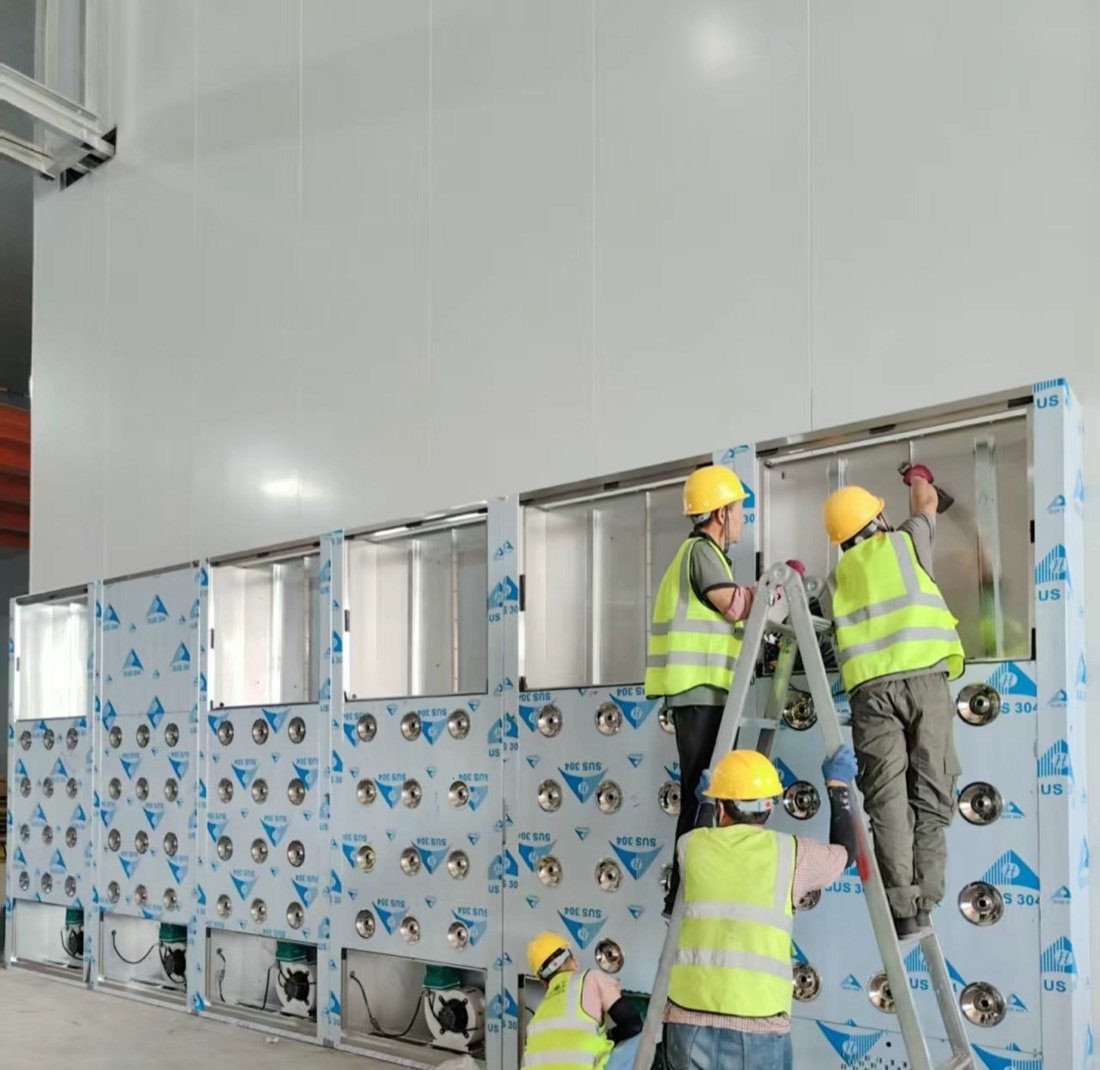
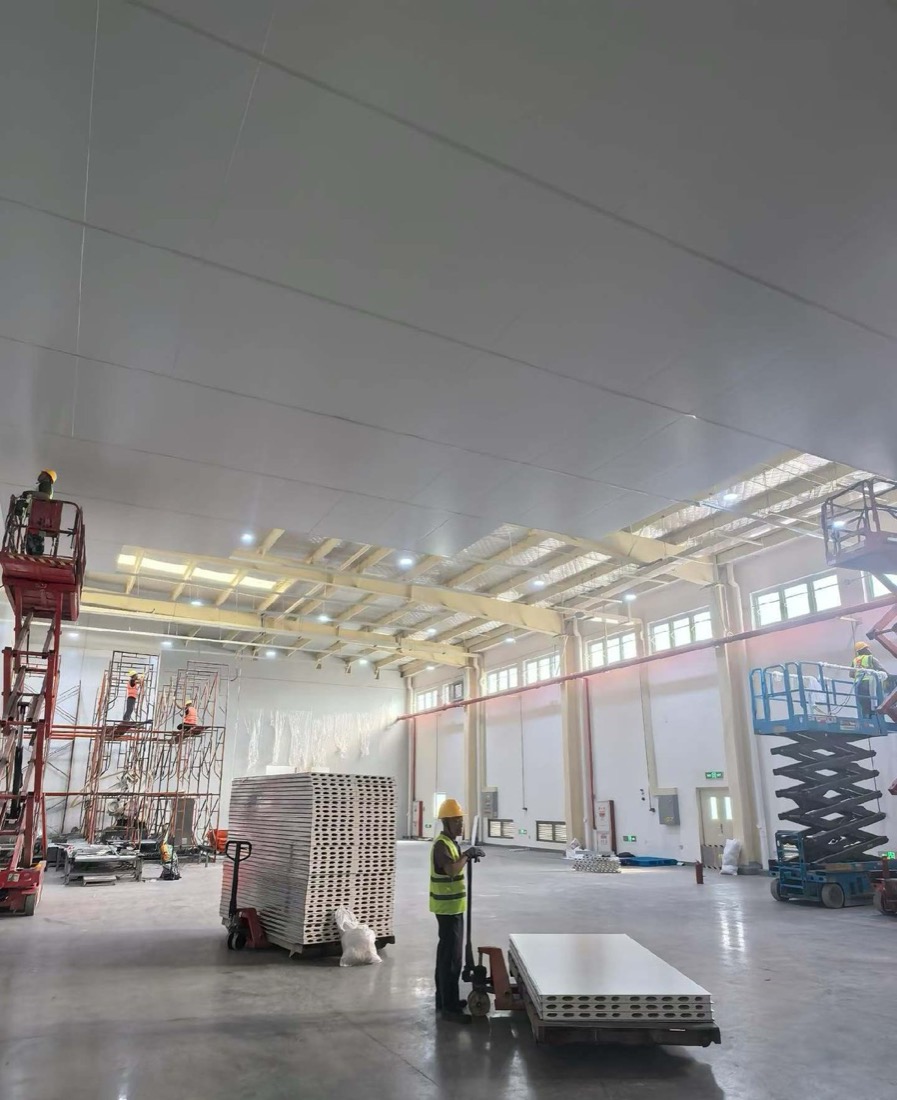
Panel walls, ceilings and air showers going in on cleanroom projects.
Proof
What you can verify today
ISO certificates
ISO 9001, 14001 and 45001 certificates for production of metal building components, available on request.
Live video factory tour
Walk our panel lines by video before you order. Ask for a time.
Project record
380+ projects for 210+ customers since 2023. References include hospitals and export projects in Indonesia, Iraq, Mongolia, Mexico and Costa Rica.
Payment and inspection
Payment by T/T or L/C. You can appoint an inspection company of your choice to check the goods before loading.
Project enquiry
Send what you have
A room list, a floor plan or only the floor area is enough to start. After you submit, send drawings by email or WhatsApp.
We reply by email within one working day. We can sign an NDA before you send drawings.
WhatsApp +44 7962 561184 is our UK number for export enquiries. The factory is in Tianjin, China.
Email: [email protected]
WhatsApp: +44 7962 561184