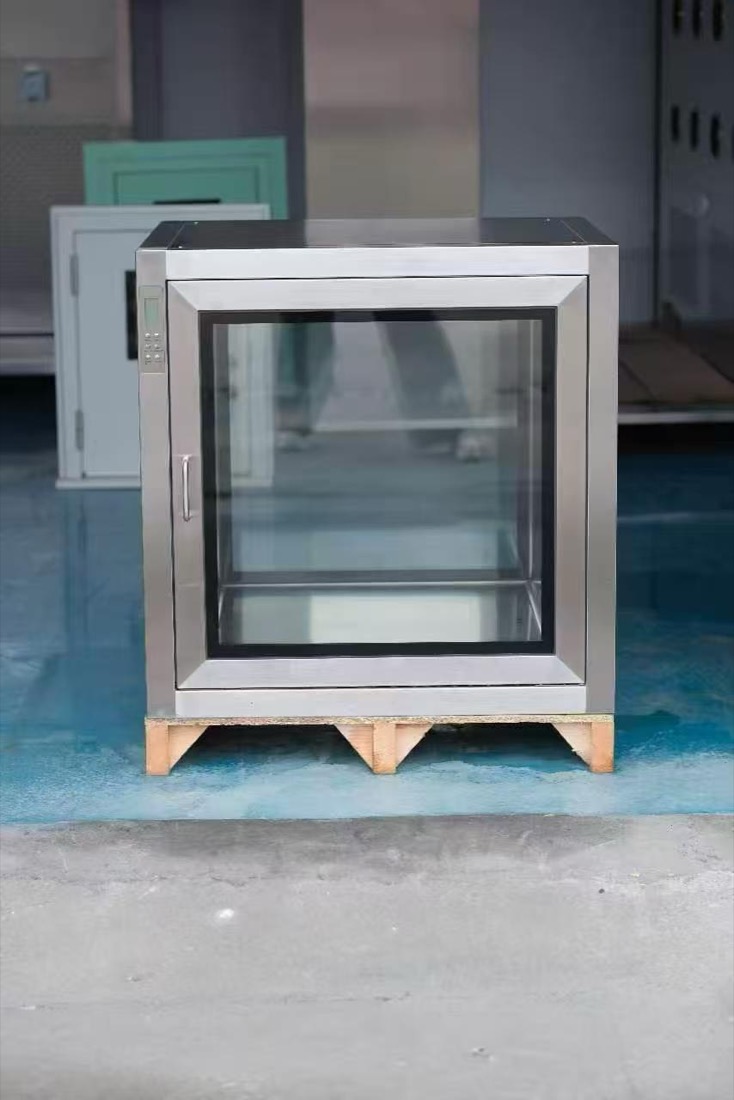
Cleanroom Pass Boxes
A cleanroom pass box is a wall-mounted chamber with interlocked doors for moving materials between zones without opening the room. Buyers specify static, dynamic or VHP versions around the transfer task.
Best for
- Material transfer between cleanroom zones
- Pharmaceutical and laboratory transfer points
- Trolley transfer at floor level
- Items that need a decontamination cycle during transfer
Specifications
Typical specification
| Types | Static (passive), dynamic (active), VHP decontamination, floor-standing transfer unit |
|---|---|
| Form | Wall-mounted chamber with interlocked doors |
| Static type | Generally no active filtered-air treatment |
| Dynamic type | Defined air-treatment arrangement, described for the offered model |
| VHP type | Cycle-specific validation evidence is requested for your load |
| Sizes to give | Largest load (W × H × D) including packaging; usable chamber and clear opening; wall thickness and installation opening; loading height |
| Service space | Door swing or lift clearance, trolley approach, access to filters, controls and utilities |
| Tests | Filter, airflow, interlock or other tests agreed in the quotation |
| Supply | Supplied in the same quotation as your panels and checked before shipping |
Options
What you can specify
- Static pass box
- Dynamic pass box
- VHP decontamination pass box
- Floor-standing transfer unit for trolleys
- Interlock and control interface to your schedule
How to choose a pass box
Specify by the transfer task. A static box moves items through a boundary. A dynamic box adds a defined air-treatment arrangement. A VHP box runs a decontamination cycle during transfer. A floor-standing unit takes trolleys. Neither the word static nor dynamic proves particle removal or sterile transfer.
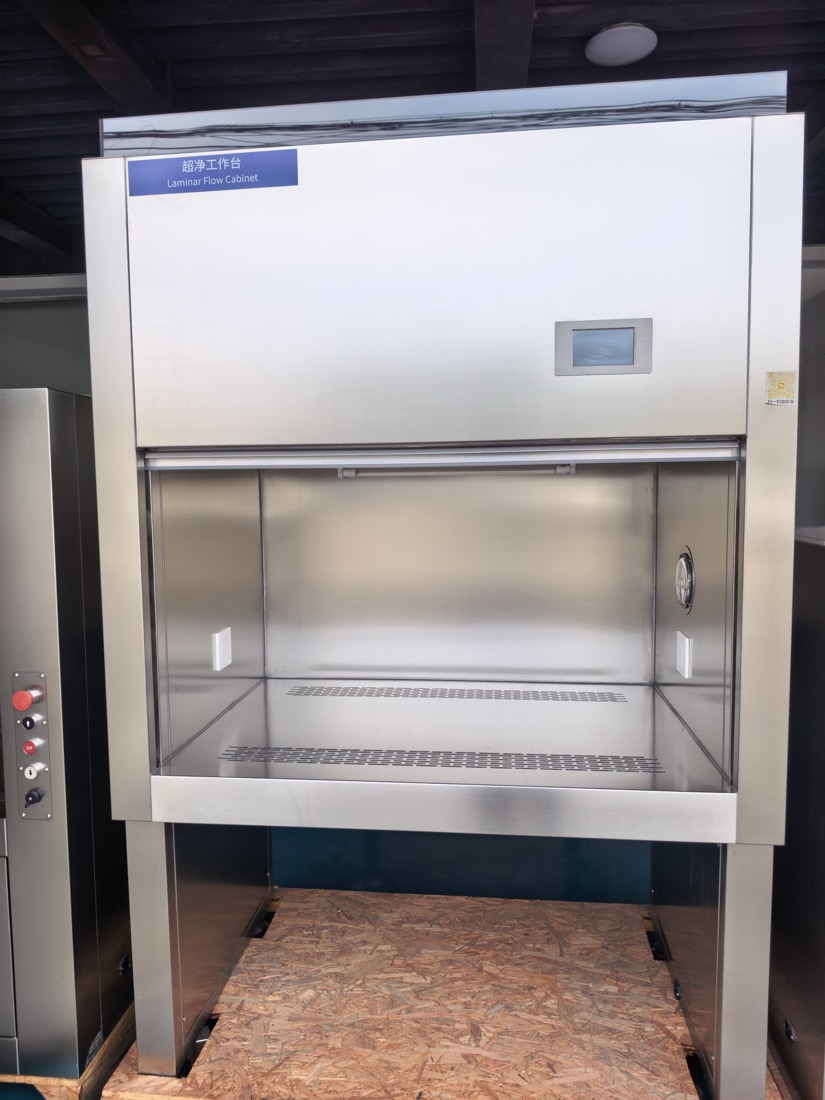
Clean benches serve a work area, not a transfer, so specify them separately.
The four types side by side
| Static | Dynamic | VHP | Floor-standing | |
|---|---|---|---|---|
| Air supply | None | Fan and HEPA filter flush the chamber | Decontamination cycle | As specified |
| Power | Interlock only | Fan, controls, interlock | Generator, controls, utilities | As specified |
| Filter to test and replace | No | Yes | As specified | As specified |
| Typical transfer | Small items between rooms of similar risk | Into a cleaner room where shedding is a risk | Items that need surface decontamination | Trolleys at floor level |
| Ask for | Interlock check | Filter class, airflow, leak test access | Cycle validation for your load | Floor interface and threshold |
The written rules
| Rule | Source |
|---|---|
| The two doors must not open at the same time | USP <797>; EU GMP Annex 1 para 4.13; GB 50073-2013 term 2.0.22 |
| Interlock for transfers into Grade A and B | Annex 1 para 4.13 |
| Visual or audible warning, at least, into Grade C and D | Annex 1 para 4.13 |
| Time delay between doors, where needed | Annex 1 para 4.13 |
| Protect the higher grade, for example by flushing with filtered air | Annex 1 para 4.12 |
| Only items on an approved list into Grade A or B | Annex 1 para 4.12 |
None of these texts requires a dynamic box in every case. Annex 1 gives flushing as an example; the choice stays with your risk assessment. China's pass box standard, JG/T 382-2012, sorts boxes by function: basic, purification, disinfection, negative pressure and airtight. State the function you need in your URS.
Size the chamber from the load
1. Take the largest item on your transfer list, in its packaging or tray, W × H × D. 2. Add room to wipe it and to handle it with gloved hands. 3. That gives the usable chamber. The clear door opening must pass the item too. 4. The external size then follows from the model. Keep chamber, clear opening and external size as three separate numbers with units. 5. Check the installation opening against the wall thickness and the loading height on both sides.
What to specify in an enquiry
Send four measurements. First, the largest transfer load, including packaging, trays or the trolley. Second, the usable chamber and clear openings. Third, the wall and floor interface: partition thickness, installation opening, loading height and threshold. Fourth, operating and service space. State units on every dimension. Add the type, interlock and control needs, required tests, quantity and destination.
A data-sheet line, filled in
| Field | Example |
|---|---|
| Mark | PB-01 |
| From / to | Grade C corridor to Grade B room |
| Type | Dynamic |
| Largest load with packaging | W × H × D, mm |
| Usable chamber | W × H × D, mm |
| Wall | 50 mm panel wall |
| Loading height | Bottom of chamber above floor, mm |
| Interlock | Doors not open together; delay set by the process |
| Final filter class | To confirm, EN 1822 class |
| Tests | Interlock check, airflow, filter leak test |
| Voltage and frequency | Site supply |
For DQ, IQ, OQ and PQ of a pass box, see pass box qualification.
What goes wrong on site
Internal chamber size and external unit size get mixed up, and the load does not fit. A VHP label is treated as proof of a validated cycle, when the cycle must be validated for your load.
Door swing, trolley approach and filter access also need room. Agree the transfer procedure and the acceptance tests with the project team before ordering. Ask for the utility schedule, and whether connection to site systems and commissioning are included.
Static vs dynamic pass box: how to choose
Questions
Common questions
What is the difference between a static and a dynamic pass box?
A static box generally has no active filtered-air treatment. A dynamic box uses a defined air-treatment arrangement that must be described for the offered model. Neither name alone proves particle removal or sterile transfer.
When is a VHP pass box used?
When items must go through a decontamination cycle during transfer. Specify load dimensions, material compatibility, utilities and the decontamination process, and request cycle-specific validation evidence.
Which dimensions should I send?
The largest item or trolley with packaging, usable chamber and clear opening, wall thickness, floor or loading height, door movement and service space. Keep chamber dimensions apart from external unit dimensions.
What tests and documents should the quotation include?
Agree equipment identification, drawings, operating instructions and the filter, airflow or interlock tests that apply. For a VHP process, define the load and cycle validation scope separately. Confirm what is done at the factory and what on site.
Do pass box doors have to be interlocked?
For transfers into Grade A and B areas, EU GMP Annex 1 para 4.13 asks for an interlock. Into Grade C and D, a visual or audible warning is the minimum. USP <797> says the two doors should never open at the same time and should interlock.
Does a dynamic pass box replace wiping the items?
No. Annex 1 still asks for cleaning and disinfection of items moving into higher grades, in line with the risk. The air flush protects the cleaner room during the transfer.
Project enquiry
Send what you have
A room list, a floor plan or only the floor area is enough to start. After you submit, send drawings by email or WhatsApp.
We reply by email within one working day. We can sign an NDA before you send drawings.
WhatsApp +44 7962 561184 is our UK number for export enquiries. The factory is in Tianjin, China.
Email: [email protected]
WhatsApp: +44 7962 561184