Buyer guide
Modular vs conventional cleanroom: how to choose
A modular cleanroom is assembled from factory-made wall and ceiling panels, and a conventional cleanroom is built on site from standard building trades. Neither type is compliant by itself: ISO 14644-4 prescribes no technology, and the finished room is judged by its test results.
By ZY Cleanroom · Updated · Sources at the end of the page
What the two types are
Modular means prefabricated panels for walls and ceilings, cut to a drawing and assembled in the building. Conventional means walls and ceilings built on site, for example from masonry or stud and board, with applied finishes.
ISO 14644-4:2022 covers new, refurbished and modified cleanrooms and says it does not prescribe specific technological or contractual means. The same ISO 14644 tests apply to both types.
What both must achieve
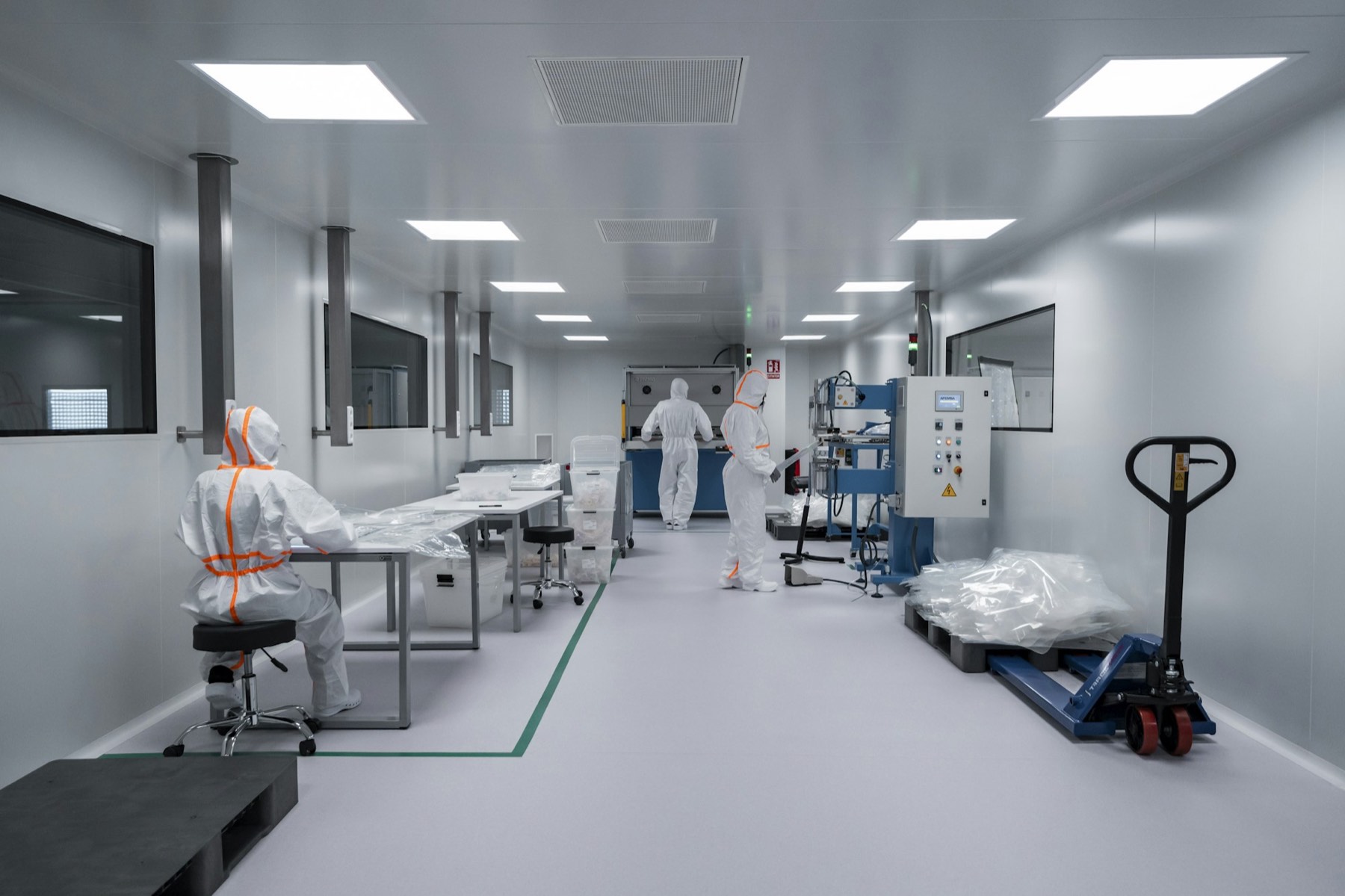
EU GMP Annex 1 (2022) gives surface rules for sterile manufacturing. Exposed surfaces should be smooth, impervious and unbroken (4.5). There should be no recesses that are hard to clean (4.6). Materials should permit repeated cleaning and disinfection (4.7). Ceilings should be sealed against the space above (4.8).
Check joints, ceiling seals and wall-to-floor interfaces on either type.
Comparison
Cost and time depend on the project, so compare real quotations. The table compares how the work is done. It describes general differences, and a project's details can change them.
| Factor | Modular | Conventional |
|---|---|---|
| Where work happens | Panels are made in a factory and assembled on site. | Most work is done on site by several trades. |
| Surfaces and joints | Factory-made faces. Joints at panel edges are sealed on site. | Surfaces are finished on site, so quality depends on site finishing and inspection. |
| Later layout change | Panels can be rearranged within the limits of the system. | Changes usually involve building work. |
| Late design change | Panels are cut to the approved drawing, so a layout change means new panels. | Changes can be absorbed on site, with rework. |
| Unusual shapes and loads | Standard sizes and fixings suit regular rooms. Custom details need design with the supplier. | Can follow the building shape and carry heavy fixtures. |
| Site disruption | Panels arrive cut to size, so there is less cutting and wet work on site. | More cutting, wet work and drying time on site. |
When each fits
Modular usually fits regular rooms inside an existing building, projects where the layout may change later, and sites where on-site cutting and wet work should be limited.
Conventional usually fits irregular building shapes, rooms that carry heavy fixtures, and projects where a layout is fixed for the life of the building.
Many projects mix the two, for example panel rooms with building-built services. The air system, utilities and tests are the same either way.
Settle these questions first. What class and occupancy state does each room need? Is the building shape regular? Will the layout change in the next few years? Who does the site work, and who runs the tests? Written answers make a fair comparison possible.
To have a room list reviewed, send it to ZY Cleanroom, a cleanroom design-and-build contractor with its own panel and door factory in Tianjin, China.
Questions
Common questions
Is a modular cleanroom GMP compliant?
GMP applies to the manufacturer's facility and operations, so no panel type is compliant by itself. The room is qualified by tests (EU GMP Annex 1, 4.24, which refers to Annex 15), and the regulator inspects the manufacturer.
Can a modular room reach ISO 7 or ISO 8?
The class is a measured result of the air, not a building method. It depends on the air system, leakage and operation, and is confirmed by ISO 14644-1 testing.
Which is cheaper, modular or conventional?
No cost comparison is given here. Cost depends on class, area, air system, the existing building and the testing required, so a fair comparison needs a room list for both routes.
Can a modular room be changed later?
Panels can be rearranged, but a changed layout changes airflow and pressure. Annex 1 (4.32) calls for requalification after changes to cleanroom design or HVAC settings.
What maintenance is required for a modular cleanroom?
Inspect panel joints, sealants, door seals and penetrations for gaps or damage, and reseal them with a material that suits your cleaning agents. Track room pressure and filter resistance, and keep the test schedule set for your class. Retest after any change to the layout or the air system.
Is a used modular cleanroom worth buying?
Only if you can prove what you are getting. Ask for the panel fire reports, drawings and filter records, and check that joints and seals survived dismantling. Past test results do not transfer, so treat it as a new room and test it on your site.
Related guides
- Modular operating theatres: scope, air and pressure standards
- Gowning room design: airlocks, zones and sequence
- Cleanroom flooring options: epoxy, vinyl, raised and static control
- How to Choose a Cleanroom Panel Manufacturer in China
- Turnkey cleanroom contractor
- Room list builder
Sources
- ISO 14644-4:2022, Cleanrooms and associated controlled environments, Part 4: Design, construction and start-up (approved 28 November 2022; scope checked 31 October 2026)
- EudraLex Volume 4, Annex 1: Manufacture of Sterile Medicinal Products (published 25 August 2022, applied from 25 August 2023; checked 31 October 2026)
- EudraLex Volume 4, Annex 15: Qualification and Validation (European Commission, 30 March 2015; in operation from 1 October 2015; checked 31 October 2026)
- ISO 14644-3:2019, Cleanrooms and associated controlled environments, Part 3: Test methods (published August 2019; contents list checked 31 October 2026)
- ISO 14644-1:2015, Cleanrooms and associated controlled environments, Part 1: Classification of air cleanliness by particle concentration (published 9 December 2015; Table 1 checked 31 October 2026)
Project enquiry
Send what you have
A room list, a floor plan or only the floor area is enough to start. After you submit, send drawings by email or WhatsApp.
We reply by email within one working day. We can sign an NDA before you send drawings.
WhatsApp +44 7962 561184 is our UK number for export enquiries. The factory is in Tianjin, China.
Email: [email protected]
WhatsApp: +44 7962 561184