Buyer guide
Upgrading an existing cleanroom for EU GMP Annex 1: gap list
The revised Annex 1 has applied since 25 August 2023, with 25 August 2024 for lyophilizer point 8.123, so an existing sterile cleanroom is judged against it now. Walk the facility against the list below, covering airlocks, pressure, surfaces, air visualisation and monitoring, and record each gap in your contamination control strategy (CCS).
By ZY Cleanroom · Updated · Sources at the end of the page
Gap list: facility and air
This list covers building and air only. Process, sterilisation, utilities, people and quality systems need their own review. Paragraph numbers are from the 2022 text.
| Para | What Annex 1 asks | Example gap in an older room |
|---|---|---|
| 4.4, 4.20 | Grade B background for RABS; isolator background at least C if open, D if closed, justified by risk | Grade C around a RABS line |
| 4.12, 4.13 | Airlocks between grades; personnel and material airlocks separate where possible; final stage same grade at rest; interlock into A and B, warning into C and D | Doors without interlock; shared airlock |
| 4.9 | No sinks or drains in grade A and B | Old floor drain in B |
| 4.5 to 4.8 | Smooth, impervious, unbroken surfaces; few recesses; sealed ceilings; sliding doors may be undesirable | Unsealed ceiling tiles; sliding door |
| 4.14, 4.16 | 10 Pa minimum between adjacent grades (guidance); indicators; critical differences monitored, recorded and alarmed | Gauges with no record or alarm |
| 4.15 | Airflow visualisation at rest and in operation, with video kept | No smoke study |
| 4.26 to 4.29 | Classify at rest and in operation; clean-up guidance under 20 minutes | Classified at rest only |
| 4.30 | Unidirectional air 0.36 to 0.54 m/s (guidance) at the working position | Velocity set to an older value |
| 4.32 | Requalify A and B at most every 6 months, C and D every 12 | One annual visit |
| 9.17, 9.18 | Grade A particles monitored continuously, at least 28 L/min, with alarms; similar system recommended for B | Periodic counts only |
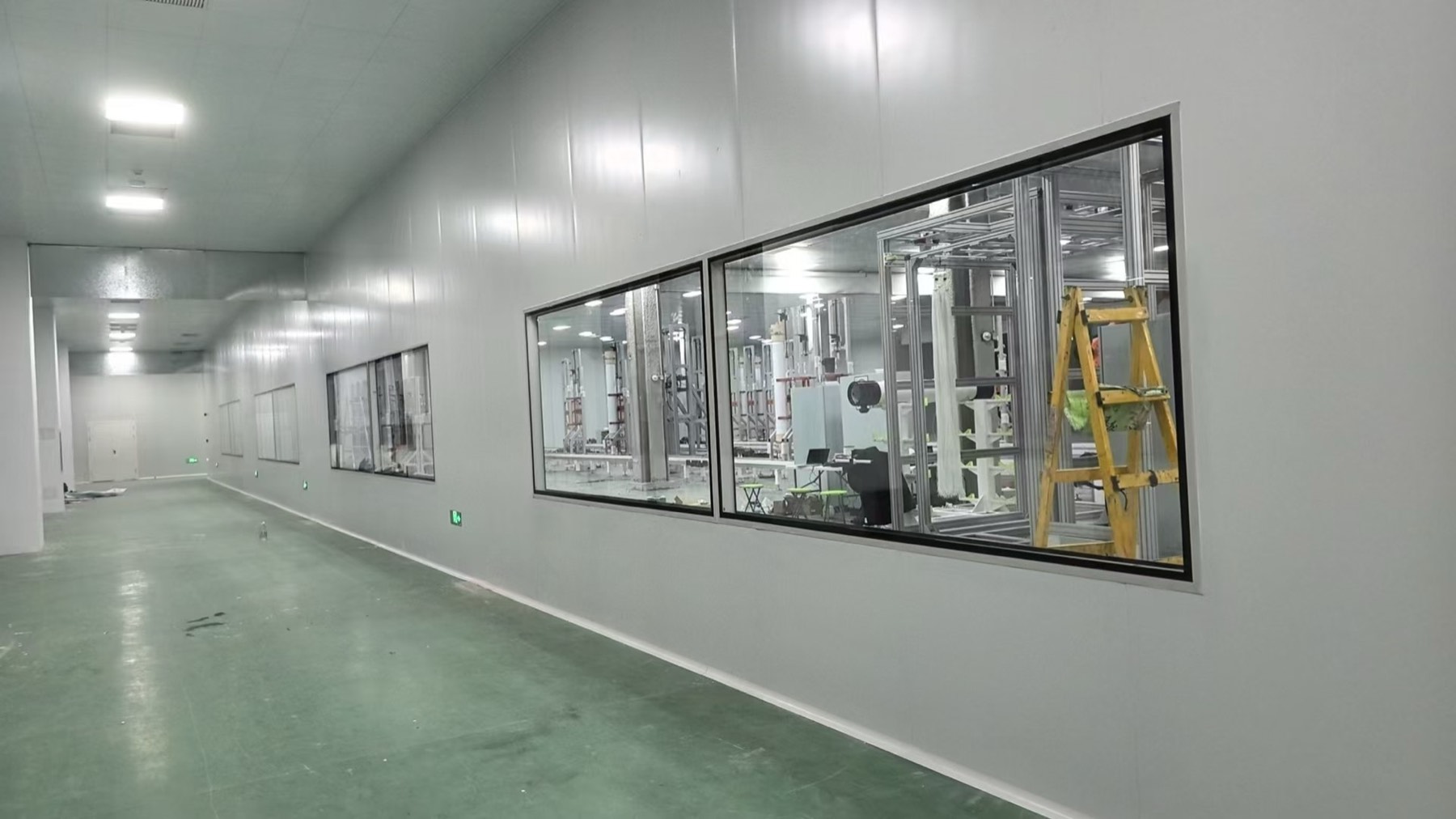
| 4.17 | Windows or cameras to observe A and B areas, including in refurbishment | No view without entry |
| 8.123 | Lyophilizer loading areas designed to minimise operator intervention | Manual open loading |
Classification limits
Table 1 of Annex 1 gives total particles of 0.5 µm and larger per m³.
| Grade | At rest | In operation |
|---|---|---|
| A | 3,520 | 3,520 |
| B | 3,520 | 352,000 |
| C | 352,000 | 3,520,000 |
| D | 3,520,000 | Not predetermined |
What to ask the tester to report
Para 4.25 lists the qualification content: installed filter leakage and integrity, airflow volume and velocity, pressure difference, airflow direction and visualisation, microbial air and surface contamination, temperature, relative humidity, recovery and, where relevant, containment leak. Ask for each item in the report, at rest and in operation.
How to run the review
Map every room to a grade. Compare drawings with the list. Then test: pressure, airflow direction, recovery and particles, at rest and in operation.
Many gaps need controls and testing, not building work: an alarm, a record, an interlock, a smoke study. Building gaps are usually drains, ceilings, sliding doors, airlock layout and barrier background. Annex 1 does not set air changes, so check airflow by test.
Some gaps can be justified instead of rebuilt. Para 4.16 asks you to weigh pressure set points and alarm delays within the CCS. Para 4.4 allows rooms of lower grade than B where isolator technology is used. Write the reasoning down.
Para 4.32 asks for requalification, with at least the listed tests, after remedial work and after changes. Its examples are an interruption of air movement, a change to HVAC settings and a change of final filters.
Who approves the room
Inspectors judge the owner's facility, not the contractor. The contractor builds to your gap-closure plan and supplies test data. The owner keeps the responsibility. To have a room list reviewed, send it to ZY Cleanroom, a cleanroom design-and-build contractor with its own panel factory in Tianjin, China.
Questions
Common questions
Does Annex 1 apply to existing cleanrooms?
The text gives dates of application, 25 August 2023 and 25 August 2024 for point 8.123. It does not list an exemption for older rooms.
Does Annex 1 set air changes per hour?
No. It gives a clean-up guidance time, a 10 Pa pressure guidance and an air speed range.
Which grades need interlocked airlock doors?
Airlocks leading to grade A and B. For C and D, a visual or audible warning is the minimum (para 4.13).
Can I keep a Grade C background for a RABS?
No. Para 4.20 says the background for RABS used in aseptic processing should be at least grade B.
Related guides
- Aseptic filling suite layout: grade A and B rooms and flows
- Contamination control strategy: what the building and air must provide
- Cleanroom validation and handover: tests, IQ/OQ/PQ and documents
- Cell and gene therapy cleanroom design: grades, segregation and flows
- Turnkey cleanroom contractor
- Room list builder
Sources
- EudraLex Volume 4, Annex 1: Manufacture of Sterile Medicinal Products (published 25 August 2022; applied from 25 August 2023, and from 25 August 2024 for point 8.123; checked 31 October 2026)
- European Commission, EudraLex Volume 4 page (lists Annex 1 as fully applicable since 25 August 2024 and Part IV as operational as of 22 May 2018; checked 31 October 2026)
Project enquiry
Send what you have
A room list, a floor plan or only the floor area is enough to start. After you submit, send drawings by email or WhatsApp.
We reply by email within one working day. We can sign an NDA before you send drawings.
WhatsApp +44 7962 561184 is our UK number for export enquiries. The factory is in Tianjin, China.
Email: [email protected]
WhatsApp: +44 7962 561184