Buyer guide
Cleanroom failed particle count: causes and fixes
A failed count means the room holds more particles than its class allows. The cause is usually the counter, the filters, the airflow or the people, so check them in that order.
By ZY Cleanroom · Updated · Sources at the end of the page
Check the limit and the room state
Compare the result with the limit for the right state. EU GMP Annex 1 (Table 1) sets these limits at 0.5 µm, in particles per m³.
| Grade | At rest | In operation |
|---|---|---|
| A | 3,520 | 3,520 |
| B | 3,520 | 352,000 |
| C | 352,000 | 3,520,000 |
| D | 3,520,000 | Not predetermined |
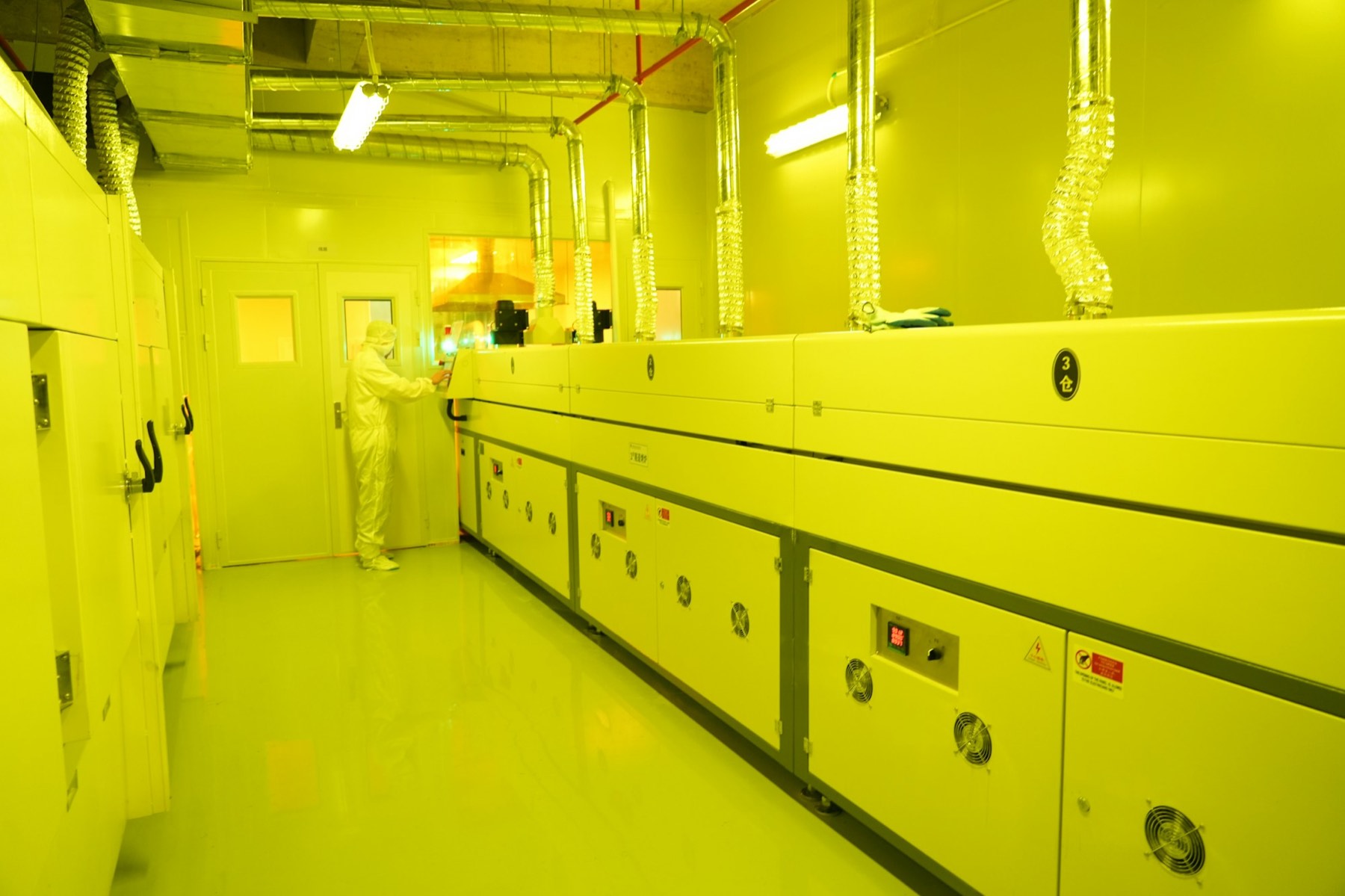
What at rest means
At rest means utilities and HVAC are running, equipment is installed but idle, and nobody is in the room (Annex 1, para 4.29). The at-rest limits should be met after a clean-up period. The guidance value is under 20 minutes.
Rule out a false result
Check the particle counter first. ISO 14644-1 bases the method on light-scattering counters and points to ISO 21501-4 for their specification. Look at the calibration certificate and the sample tube.
Annex 1 (Table 5, note 2) says an occasional count at 5 µm or larger in grade A may be false. Causes include electronic noise, stray light and coincidence loss. Consecutive or regular low counts should be investigated. They can point to early filter failure, equipment failure or poor practice during set-up.
Example only. Annex 1 (para 9.17) asks for a sample flow of at least 28 litres per minute. One 5 µm particle in a 28-litre sample equals about 36 per m³. The grade A monitoring limit at 5 µm is 29 per m³ (Table 5). So one particle in one sample can exceed the limit. This is why repeated counts matter more than a single count.
Find the cause by symptom
| What you see | Likely cause | First check |
|---|---|---|
| High at every location | Filter leak, seal bypass or too little airflow | Installed-filter leak test and airflow volume (Annex 1, para 4.25) |
| High under one filter | Leak in that filter's media, frame or seal | Scan that filter and its seal |
| Fails only in operation | People, materials or equipment shedding | Gowning, transfers and equipment set-up |
| Rose after building work | Disturbed ceiling or wall structure | Repeat the leak test (FDA, 2004) |
| Slow to recover | Low airflow or poor mixing | Recovery test against the clean-up guidance |
| Repeated 5 µm counts in grade A | Early filter or equipment failure | Investigate at once |
Check the air pattern
Annex 1 (para 4.15) asks for airflow visualisation, at rest and in operation. It should show that air does not move from the floor, or over operators and equipment, towards the higher grade. Where air movement is a risk, the fix is a corrective action such as a design improvement.
FDA says at least 20 air changes per hour is typically acceptable for ISO 8 supporting rooms. It says significantly higher rates are normally needed for ISO 7 and ISO 5 areas.
Fix it, then prove it
FDA says even a qualified system can be compromised by poor operational, maintenance or personnel practices. Fix the practice as well as the hardware.
After a repair, Annex 1 (para 4.32) asks for requalification. The minimum is classification, final-filter integrity, airflow volume and the pressure difference between rooms, plus air velocity where it applies. A change of final filters is listed as a change to consider.
If the cause is the design, for example a ceiling that is not sealed (para 4.8), the fix is a retrofit. Write the finding into the room data sheet before you ask for a quote.
Who approves the room
Your regulator or customer auditor judges the facility and your investigation, not the contractor. The contractor builds to your room data sheet and supplies test data. To have a room list reviewed, send it to ZY Cleanroom, a cleanroom design-and-build contractor.
Questions
Common questions
How many particles can a grade B room hold at rest?
Annex 1 allows 3,520 particles per m³ at 0.5 µm at rest and 352,000 in operation (Table 1).
Is one high count a failure?
Not always. Annex 1 says an occasional count at 5 µm or larger in grade A may be false. Repeated or regular counts should be investigated.
How fast must a room recover?
Annex 1 gives a guidance value of under 20 minutes to reach the at-rest limits after operations. Your own qualification sets the figure you work to.
What do I retest after a fix?
Annex 1 (para 4.32) lists classification, final-filter integrity, airflow volume, pressure difference between rooms and, where it applies, air velocity.
Related guides
- Cleanroom monitoring systems: particles, pressure, temperature and humidity
- EU GMP grades A to D compared with ISO classes
- Cleanroom pressure differentials: cascades, values, monitoring
- ISO 7 and ISO 8 cleanroom requirements
- Turnkey cleanroom contractor
- Room list builder
Sources
- EudraLex Volume 4, Annex 1: Manufacture of Sterile Medicinal Products (published 25 August 2022, applied from 25 August 2023; checked 31 October 2026)
- FDA, Guidance for Industry: Sterile Drug Products Produced by Aseptic Processing, Current Good Manufacturing Practice (September 2004, nonbinding; checked 31 October 2026)
- ISO 14644-1:2015, Cleanrooms and associated controlled environments, Part 1: Classification of air cleanliness by particle concentration (redline comparison preview on iTeh Standards, introduction, scope and Table 1; published December 2015, the 2015 edition; checked 31 October 2026)
Project enquiry
Send what you have
A room list, a floor plan or only the floor area is enough to start. After you submit, send drawings by email or WhatsApp.
We reply by email within one working day. We can sign an NDA before you send drawings.
WhatsApp +44 7962 561184 is our UK number for export enquiries. The factory is in Tianjin, China.
Email: [email protected]
WhatsApp: +44 7962 561184