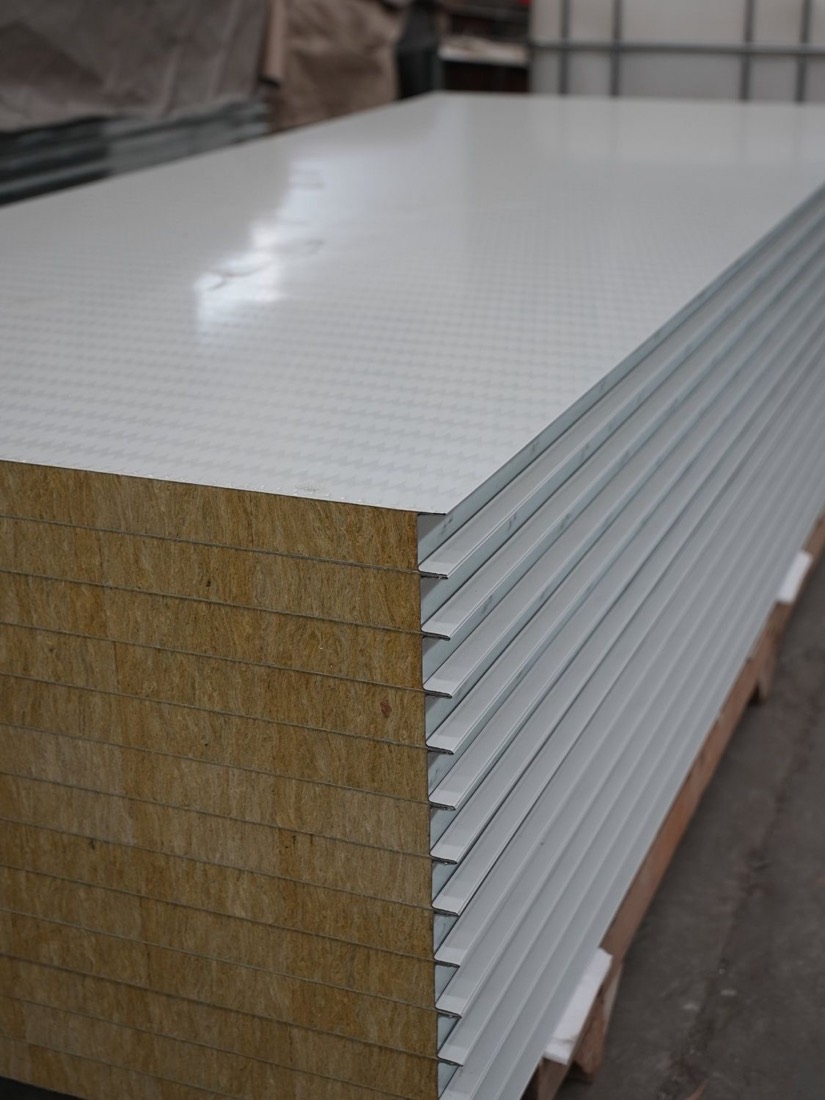
Rock Wool Cleanroom Panel Manufacturer: Sandwich Panels Made in Tianjin, China
Our rock wool cleanroom panels have a non-combustible mineral wool core between two metal faces. They are made in our factory in Binhai New Area, Tianjin, in two families: the handmade cleanroom panel (1,180 mm wide, 50 mm standard, 100–6,000 mm long) and the tongue-and-groove wall and roof panel (950 or 1,150 mm series, 40–250 mm). Core density and face steel are set per order; recent cleanroom orders used 80 and 100 kg/m³ cores and 0.5 mm steel faces. A rock wool core does not give a fire rating by itself. Fire test reports for our rock wool panels are available on request, and we confirm which report covers the build you need. The factory has 4 panel production lines, both continuous and handmade, and you can see them on a live video tour before you order.
Best for
- Pharmaceutical and food clean areas
- Hospital and laboratory rooms
- Electronics assembly rooms
- Internal partition walls that separate areas
- Factory and warehouse walls and roofs
Specifications
Typical specification
| Core | Rock wool (non-combustible mineral wool) |
|---|---|
| Core density | Set per order; 80 and 100 kg/m³ on recent cleanroom orders. State it in your enquiry |
| Faces | Colour-coated steel; stainless steel on handmade panels. Thickness, coating and colour to order |
| Edge frame (handmade) | Galvanized steel frame strips and corner fittings on all four edges |
| How it is made (handmade) | Faces, edge frame and core are bonded by heating, pressing and curing |
| Handmade panel width | 1,180 mm standard |
| Handmade panel thickness | 50 mm standard |
| Handmade panel length | 100–6,000 mm cut length |
| Tongue-and-groove width series | 950 mm and 1,150 mm (effective cover width is confirmed on the section drawing) |
| Tongue-and-groove thicknesses | 40, 50, 75, 100, 150, 200 and 250 mm |
| Tongue-and-groove model codes | HA-RW-TG950/40 to /250 and HA-RW-TG1150/40 to /250 |
| Joints | Handmade: centre aluminium connection or male-female. Wall and roof series: tongue-and-groove |
Options
What you can specify
- Colour-coated or stainless steel faces
- PE polyester, HDP polyester or PVDF coating
- Anti-static or conductive face finish
- Centre aluminium or male-female joint on handmade panels
- Tongue-and-groove wall and roof panels
- Cut lengths to your panel schedule
- Rock wool core with one or both faces backed by an MgO board layer (confirm the layer build-up on the drawing)
- Matching aluminium profiles: channels, H-connectors, corner posts, inner and outer curved coving, door and window sections
How to choose a rock wool panel
Rock wool is a non-combustible mineral core. It is used where a combustible foam core is not allowed, such as fire-separating walls. PU or PIR panels are lighter and are usually chosen for insulation, for example in cold rooms.
Handmade or tongue-and-groove: which family you need
We make rock wool panels in two families. They have different sizes and joints, so treat them as two products on a quotation.
| Handmade cleanroom panel | Tongue-and-groove panel | |
|---|---|---|
| Typical use | Cleanroom walls and ceilings | Factory and warehouse walls and roofs, partitions |
| Width | 1,180 mm standard | 950 or 1,150 mm series |
| Thickness | 50 mm standard | 40, 50, 75, 100, 150, 200, 250 mm |
| Length | 100–6,000 mm cut length | Set by your panel schedule |
| Joint | Centre aluminium connection or male-female | Tongue-and-groove |
| Edges | Galvanized steel frame strips and corner fittings | Confirmed on the quotation |
| Faces | Colour-coated or stainless steel | Colour-coated steel |
The handmade family is our cleanroom panel: it takes stainless faces and a centre aluminium or male-female joint. The tongue-and-groove family is our wall and roof series, for the building around the cleanroom and for partitions.
Do not use the 1,180 mm width to count tongue-and-groove panels, or the 950/1,150 mm series to count handmade panels. Mixing them gives the wrong panel count.
Core density and face steel
Two quotes for "50 mm rock wool panel" can differ in core density and steel thickness, and both change weight, stiffness and price. State both in your enquiry, and compare quotes at the same values.
| Order (from our sales contracts) | Thickness | Core | Faces |
|---|---|---|---|
| PCB laser-drill cleanroom, Tianjin, 2023 | 50 mm | Rock wool, 100 kg/m³ | 0.5 mm white steel both faces |
| Chocolate factory workshops, 2023 to 2025 | 75 mm | Rock wool, 100 kg/m³ | White or stainless steel |
| Pharmaceutical workshop, Tianjin, 2025 | 50 mm, machine-made | Water-repellent rock wool, 80 kg/m³ | As ordered |
| New materials plant, Hebei, 2024 | 150 mm | Rock wool | As ordered |
| Generator set maker, Tianjin, 2024 | As ordered | Perforated acoustic rock wool panel | As ordered |
These are past orders, not a standard range. We propose density and steel on the section drawing once we know the room, the wall height or ceiling span, the fire rules and the cleaning regime.
To estimate weight: two 0.5 mm steel faces weigh about 7.9 kg/m². A 50 mm core at 100 kg/m³ adds about 5 kg/m². Ask every supplier for the declared mass in kg/m² of the panel you are quoted. For the full method, see comparing panel quotes.
Industry reference values for rock wool panels
For comparison, the main European makers publish these values for rock wool sandwich panels. They are industry reference values, not results for our panels; the declared value for the panel you order is the one to design with.
| Property | Industry reference range | Note |
|---|---|---|
| Thermal conductivity λ of the core | 0.041–0.044 W/(m·K) | Declared under EN 14509 and EN 13162 |
| U-value, 100 mm panel | 0.40–0.41 W/(m²·K) | EN 14509 method, joints included |
| U-value, 150 mm panel | 0.27–0.28 W/(m²·K) | EN 14509 method |
| Core density | About 110 kg/m³ | Our orders have used 80 and 100 kg/m³ cores |
| Reaction to fire, EN 13501-1 | Rock wool panels are commonly classed A2-s1,d0 | The class of our panels is confirmed from the factory test report for the build you order |
On insulation, rock wool needs roughly twice the thickness of a PIR panel for the same U-value: about 0.41 at 100 mm against 0.18–0.22 for PIR. That is the trade for a non-combustible core.
For roofs, European makers commonly give a minimum pitch of about 4°, or 7%, for trapezoidal roof panels with end laps. Confirm the pitch, the profile and the end lap for our tongue-and-groove roof series on the section drawing.
Rock wool against the other cores we make
| Core | Fire note | Weight | Insulation | Use it when |
|---|---|---|---|---|
| Rock wool | Non-combustible mineral core | Heaviest of the mineral cores | Better than hollow MgO | A combustible core is not allowed and insulation matters |
| Hollow MgO | Non-combustible inorganic core | Medium | Moderate | You want a lighter non-combustible panel in a dry room |
| PU | Organic foam; class depends on formulation and test | Light | Used for insulation-led rooms | Insulation is the main need and fire rules allow foam |
| Honeycomb (aluminium or paper) | Depends on the core | Light | Confirmed on the quotation | Light partitions and ceilings with a support design |
Fire rules set the shortlist. A core name does not give a fire rating. The rating belongs to the tested panel, so ask for the report that covers the faces, core and thickness on your quotation. For the Euroclass system, see our panel selection guide.
If your specification says "fire-rated rock wool panel"
Rock wool is a non-combustible mineral core, which is why it is chosen where a foam core is not allowed. But "fire-rated" describes a tested panel, not a core. A reaction-to-fire class (for example a Euroclass, see the Euroclass system) or a fire-resistance period belongs to the panel or wall assembly that was tested: faces, core, density, thickness, joints and fixings.
So for a fire-rated wall or ceiling, send us:
- The fire rule or standard your project must meet, and the class or period it asks for.
- Whether the requirement is for reaction to fire (the panel surface) or fire resistance (the wall or ceiling as a barrier).
- The wall height, ceiling span and the openings in the fire wall.
Fire test reports for our rock wool panels are available on request. We confirm which report covers the build-up you need; if none does, the quotation says so.
What to specify in an enquiry
Send the destination country, whether the panels are for walls or ceilings, and the drawing revision. Give the thickness, effective cover width, cut lengths and the quantity at each length. State both metal faces: material, coating, thickness and colour. Add the joint type, the openings for doors, windows and pass boxes, and any test or design documents you need. For a roof, send the roof section, supports, penetrations and edge details.
Quote checklist
| Send | Why |
|---|---|
| Destination country and port | Packing, freight and any local product rules |
| Wall and ceiling schedules, sent separately | Ceilings need a support design; walls do not use the same quantities |
| Family, thickness and width series | Handmade 1,180 mm and tongue-and-groove 950/1,150 mm are counted differently |
| Cut lengths and quantity at each length | Panels are cut and numbered to your layout |
| Both faces: metal, coating, thickness, colour | Each side can differ; corridor and room sides are often different |
| Joint type | Centre aluminium or male-female for handmade panels |
| Openings for doors, windows, pass boxes | Openings and frames are planned with the panels |
| Cleaning agents used in the room | Coating and sealant must tolerate them |
| Reports you need (fire, thermal) | Reports must match the exact build |
If you only have a floor plan, that is enough to start. Our room list builder takes about five minutes.
Specification text for tenders
Copy this text into your tender and fill the brackets. It describes a rock wool cleanroom panel by what it must do, so any manufacturer can price it. For the general wall and ceiling clauses, see the panel specification text on our cleanroom sandwich panels page, and for wall layouts see cleanroom wall panel systems.
ROCK WOOL CLEANROOM PANELS

2.1 Panel family: [handmade cleanroom panel with steel edge frame /
    tongue-and-groove panel], [  ] mm thick, effective cover width [  ] mm.
2.2 Core: rock wool, density [  ] kg/m3, [water-repellent], fibres laid
    [as manufacturer's standard / state], no voids at edges and corners.
2.3 Edges: [galvanized steel frame strips and corner fittings on all four
    edges / tongue-and-groove formed edge].
2.4 Faces: room side [colour-coated steel / stainless steel grade (  )],
    [  ] mm, coating [PE / HDP / PVDF / anti-static]; corridor side [as room
    side / state]. [MgO board layer under the (room / both) face(s).]
2.5 Joint: [centre aluminium connection / male-female / tongue-and-groove],
    sealed on the room side.
2.6 Fire: [class or period required], shown by a fire test report for the
    rock wool panel assembly at the tendered thickness, density and faces.
2.7 Acoustic panels (where scheduled): perforated face on the [room] side,
    [perforation pattern], for walls marked [  ].
2.8 Submittals: section drawing, declared mass in kg/m2, core density
    statement, fire test report, coating data, numbered layout drawing.
Download the specification text (TXT)
Cleanroom sandwich panels for Kazakhstan and Uzbekistan
We manufacture cleanroom sandwich panels in our own factory in Tianjin and supply them for sites in Kazakhstan (Almaty, Astana, Shymkent and other cities) and Uzbekistan (Tashkent, Samarkand and other cities). The route and delivery terms are agreed in the quotation: tell us the site city.
| What we supply | Details |
|---|---|
| Handmade rock wool panels | 1,180 mm wide, 50 mm thick, 100–6,000 mm long; colour-coated or stainless steel faces |
| Tongue-and-groove panels with a rock wool core | 950 and 1,150 mm series, 40–250 mm thick |
| Panels with MgO, PU, paper or aluminium honeycomb cores | See hollow MgO panels, PU panels and honeycomb panels |
| Doors, windows and ceilings | Cleanroom doors and ceilings in one quotation with the panels |
| Profiles and accessories | Floor tracks, aluminium profiles, coves, sealant |
How the order arrives:
- Panels cut to length and numbered to the layout drawing.
- Packed on timber pallets.
- An installation guide in Russian and WhatsApp video support from our engineer for your crew.
- On a turnkey contract our own crew installs, including installing and commissioning the ventilation. Works that need a local licence are carried out by a licensed local contractor named in the contract.
Documents:
- Fire test reports for the rock wool panels are available on request.
- The fire class your site needs is set by local rules: state it in your enquiry, and we confirm the panel option in writing.
- Your customs broker confirms the commodity code for your shipment.
To price the panels, send the site city, the layout or room list, the height, the panel family (handmade or tongue-and-groove), the thickness, the faces on both sides, the joint type, the openings for doors, windows and pass boxes, and the documents you need. Fastest reply: message us on WhatsApp (+44 7962 561184) and send the layout.
Installation and what ships with the order
On supply-only orders your local crew installs the panels. Each order can ship with:
- a layout drawing with every panel numbered, and door, window and corner positions marked;
- panels cut to length and labelled to match the drawing;
- an installation guide in English, Spanish, Portuguese, Arabic or Russian, with short videos of each step;
- an accessory kit: floor tracks, aluminium profiles, corner coves, flashings, screws and sealant;
- a WhatsApp video call with our engineer to check set-out and the first panels.
On-site supervision can be arranged for larger projects; the scope is set in the quotation. The usual sequence is floor track, wall panels, corners, ceiling, doors and windows, then lights, filters and penetrations, then the final seal and a leak test. See the panel installation guide for tolerances and sealing rules.
Panels leave the factory strapped and stacked on timber pallets.
What goes wrong on site
A width series is not an effective cover width. If the two are mixed up on a quotation, the panel count is wrong. Ask for the dimensioned section drawing before you calculate quantities.
A core name does not give a fire rating. The rating belongs to the tested panel assembly, so ask for the report that matches the build you are quoted. Panel thickness alone does not set a ceiling load or a walk-on rating.
Customs code
A US customs ruling (N358876, March 2026) classed a steel-faced cleanroom partition panel with a rock wool core under subheading 7308.90. Goods sold as a complete prefabricated building may fall under heading 9406 instead. Customs in your country decides, so ask your broker to confirm the code for your panel.
Cleanroom panel selection: core materials compared
Cleanroom sandwich panels for Saudi Arabia and the UAE: types, supply and installation
Questions
Common questions
Are you a rock wool cleanroom panel manufacturer or a trader?
A manufacturer. We make rock wool cleanroom panels, handmade and tongue-and-groove, on our 4 panel lines in Binhai New Area, Tianjin, in production since 2002. You can see the lines on a live video tour or audit the factory in person before you order.
Which widths and thicknesses are listed?
Handmade panels are 1,180 mm wide and 50 mm thick as standard, cut from 100 to 6,000 mm. Tongue-and-groove panels are listed in 950 and 1,150 mm series at 40, 50, 75, 100, 150, 200 and 250 mm. The size you are offered is confirmed on the section drawing in the quotation.
Does a rock wool core give a fire rating?
No. Fire performance belongs to the tested panel assembly and standard. Ask for the report that covers the exact faces, core and thickness you are quoted.
Can a team that has never installed panels use these?
Panels are numbered and sent with layout drawings and an installation guide. Our engineers give video-call support to your team.
Should I use the handmade or the tongue-and-groove rock wool panel for a cleanroom?
The handmade family is our cleanroom panel: 1,180 mm wide, 50 mm thick, with a centre aluminium or male-female joint and colour-coated or stainless faces. The tongue-and-groove family is mainly for building walls, roofs and partitions.
Can I see the panels being made before I order?
Yes. We run live video tours of our panel lines in Tianjin, and you can also audit the factory in person. See our factory audit guide for what to check.
What density is the rock wool core?
It is set per order. Recent cleanroom orders used 100 kg/m³ cores on 50 and 75 mm panels, and a water-repellent 80 kg/m³ core on 50 mm machine-made panels. Tell us the room and the fire rules, and we propose a density on the section drawing.
What steel thickness are the faces?
It is set per order and can differ on each side. A 2023 PCB cleanroom order used 0.5 mm white steel on both faces. State the metal, coating, thickness and colour of each face, so that quotes can be compared.
Do you make fire-rated rock wool cleanroom panels?
We make rock wool panels with a non-combustible core. A fire rating belongs to the tested panel or wall assembly, so send the class or period your project needs. Fire test reports for our rock wool panels are available on request, and we confirm which one covers that build-up.
Is there tender specification text for rock wool cleanroom panels?
Yes, on this page. It sets the panel family, thickness, core density, edges, faces, joint, fire evidence and submittals as fill-in brackets, so any manufacturer can price it.
Do you supply cleanroom sandwich panels to Almaty and Tashkent?
Yes. We manufacture the panels in Tianjin and supply them for sites in Kazakhstan and Uzbekistan. The route and delivery terms are agreed in the quotation for the site city.
Who installs the panels on a site in Kazakhstan or Uzbekistan?
On a turnkey contract, our own crew. On a supply-only order, your crew installs with our numbered drawings and an installation guide in Russian, with video support from our engineer.
What documents are available for the rock wool panels?
Fire test reports are available on request.
How are rock wool panels packed for shipping?
Cut to length, numbered to the layout drawing and packed on timber pallets, with a packing list that follows the panel numbering. Your inspection company can check the goods before loading. See how to import a cleanroom from China.
What U-value does a 100 mm rock wool panel have?
Industry reference values from the main European makers are 0.40–0.41 W/(m²·K) at 100 mm and 0.27–0.28 at 150 mm, calculated by the EN 14509 method. Ask for the declared value of the exact panel on your quotation; these are not test results for our panels.
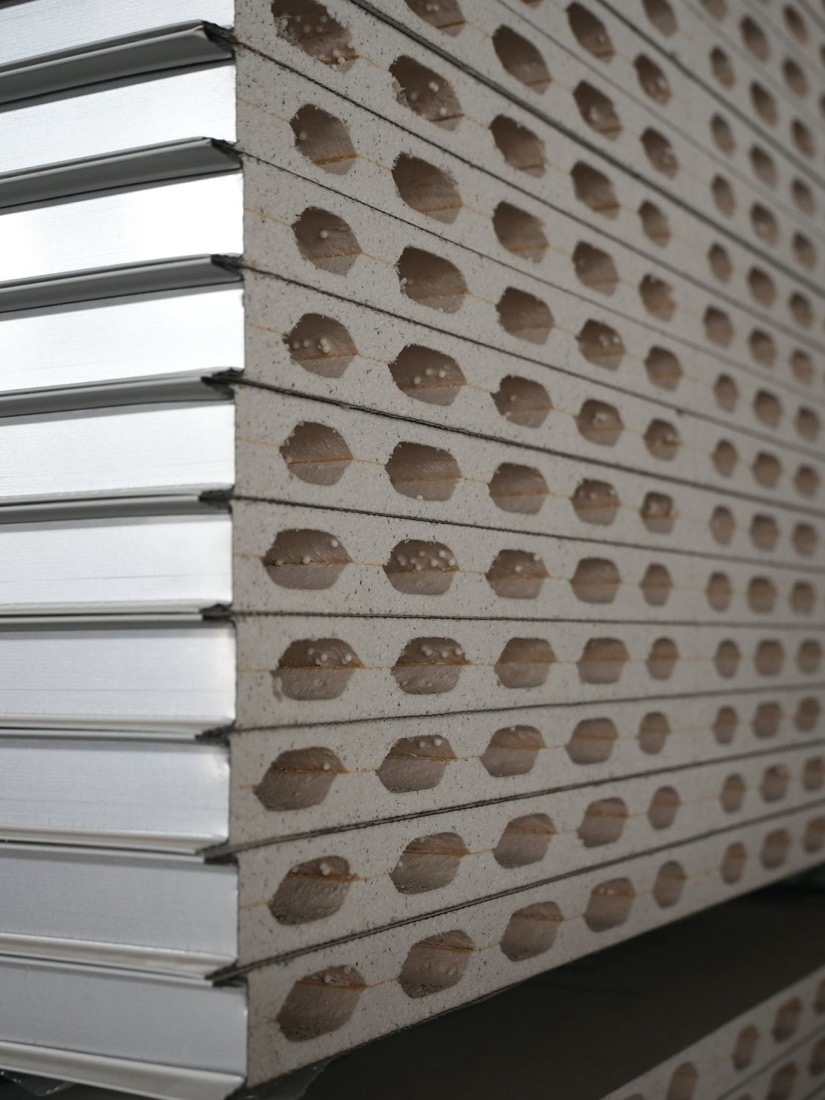
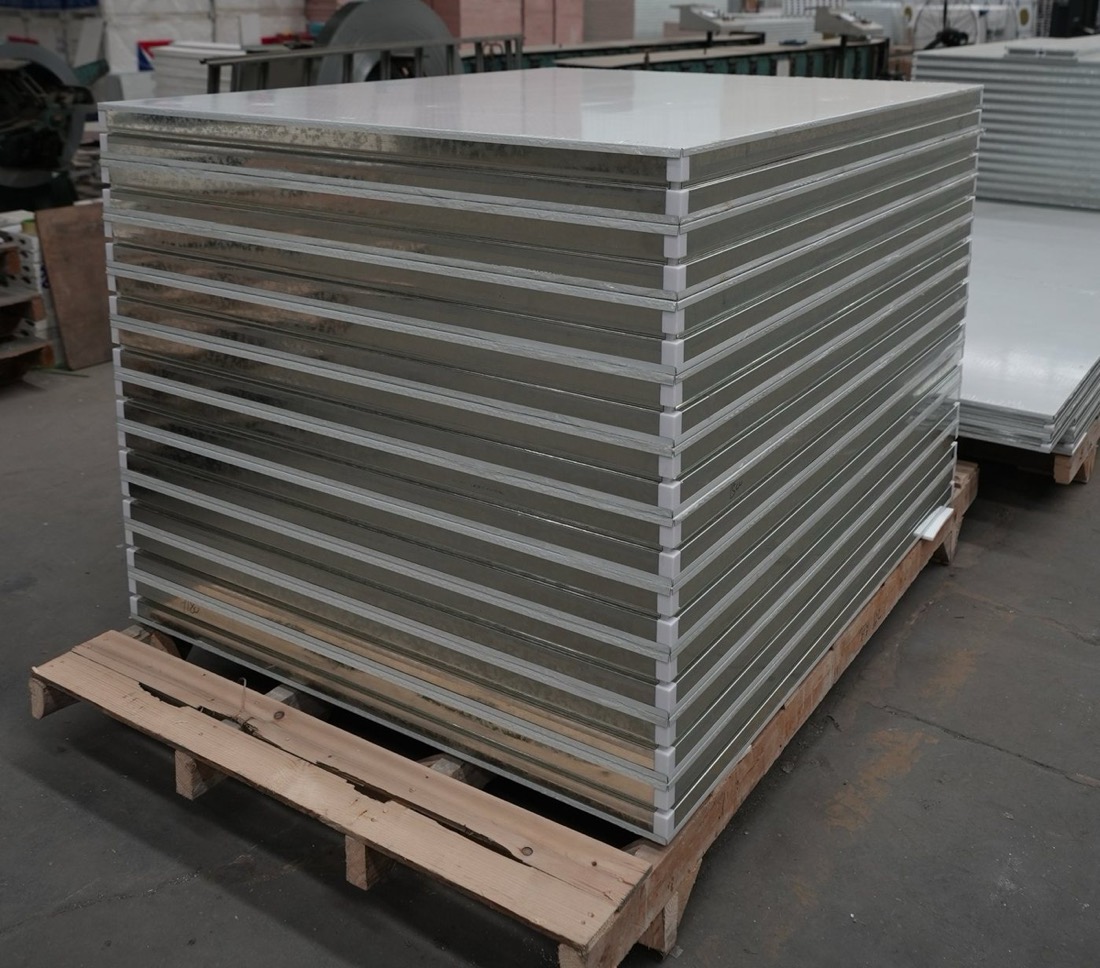
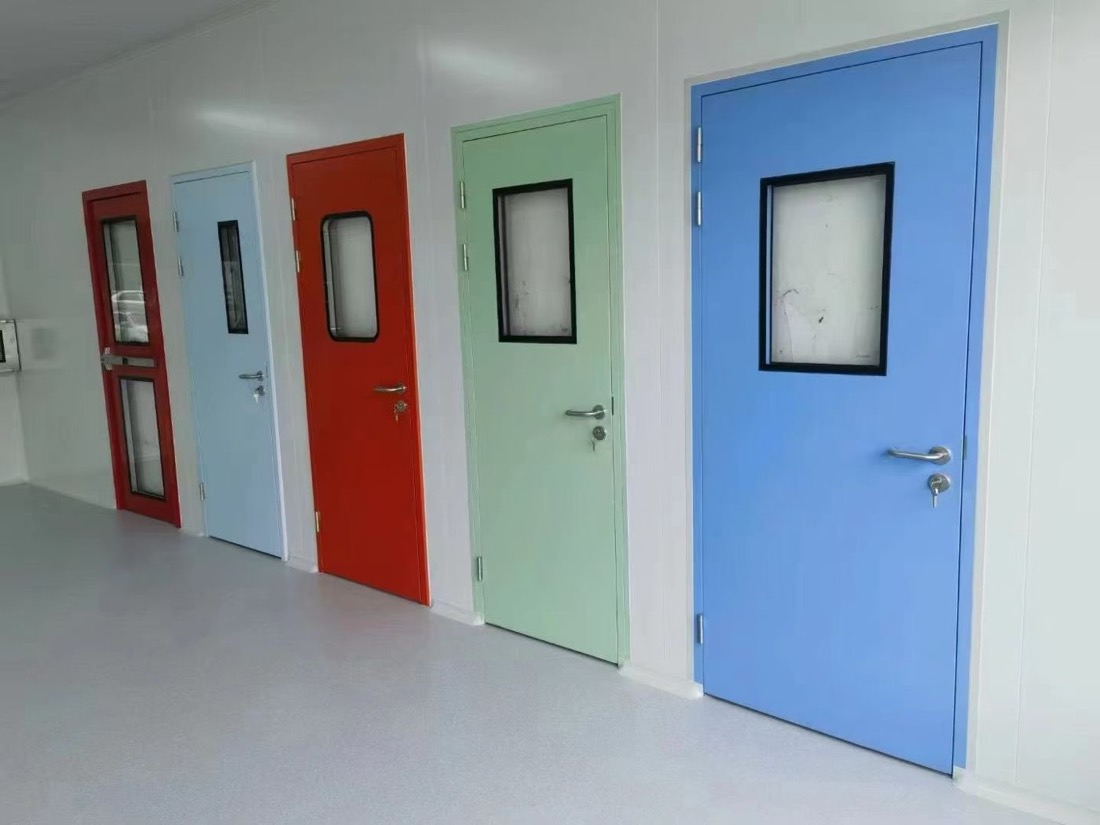
Project enquiry
Send what you have
A room list, a floor plan or only the floor area is enough to start. After you submit, send drawings by email or WhatsApp.
We reply by email within one working day. We can sign an NDA before you send drawings.
WhatsApp +44 7962 561184 is our UK number for export enquiries. The factory is in Tianjin, China.
Fastest reply: message us on WhatsApp. Or use the form, and add your WhatsApp number so we can reply there.
Email: [email protected]
WhatsApp: +44 7962 561184