Buyer guide
ISO 6 Cleanroom (Class 1,000): Limits, Uses and Design
An ISO 6 cleanroom is a room whose air holds no more than 35,200 particles of 0.5 µm or larger per cubic metre, and 8,320 of 1 µm or larger, under ISO 14644-1 (Table 1). It is the equivalent of the old Class 1,000, sits ten times cleaner than ISO 7 and ten times less clean than ISO 5, and is used mainly for precision electronics assembly, test and inspection, semiconductor packaging and test, and some areas next to aseptic processing. The class sets a particle limit only; the air system that holds it comes from your process and is proved by test.
By ZY Cleanroom · Updated · Sources at the end of the page
ISO 6 particle limits
| Particle size | ISO 6, particles per m³ | For comparison: ISO 5 | ISO 7 |
|---|---|---|---|
| 0.1 µm and larger | 1,000,000 | 100,000 | — |
| 0.2 µm and larger | 237,000 | 23,700 | — |
| 0.3 µm and larger | 102,000 | 10,200 | — |
| 0.5 µm and larger | 35,200 | 3,520 | 352,000 |
| 1 µm and larger | 8,320 | 832 | 83,200 |
| 5 µm and larger | 293 | No table entry | 2,930 |
Source: ISO 14644-1:2015, Table 1. Limits are cumulative: a count at 0.5 µm includes every particle 0.5 µm or larger. A dash means the table sets no limit at that size for that class.
Choose which particle sizes you will count, and write them in the room list. Electronics and semiconductor users may count small sizes such as 0.1 or 0.3 µm; ISO 6 has limits at those sizes, while ISO 7 and ISO 8 do not.
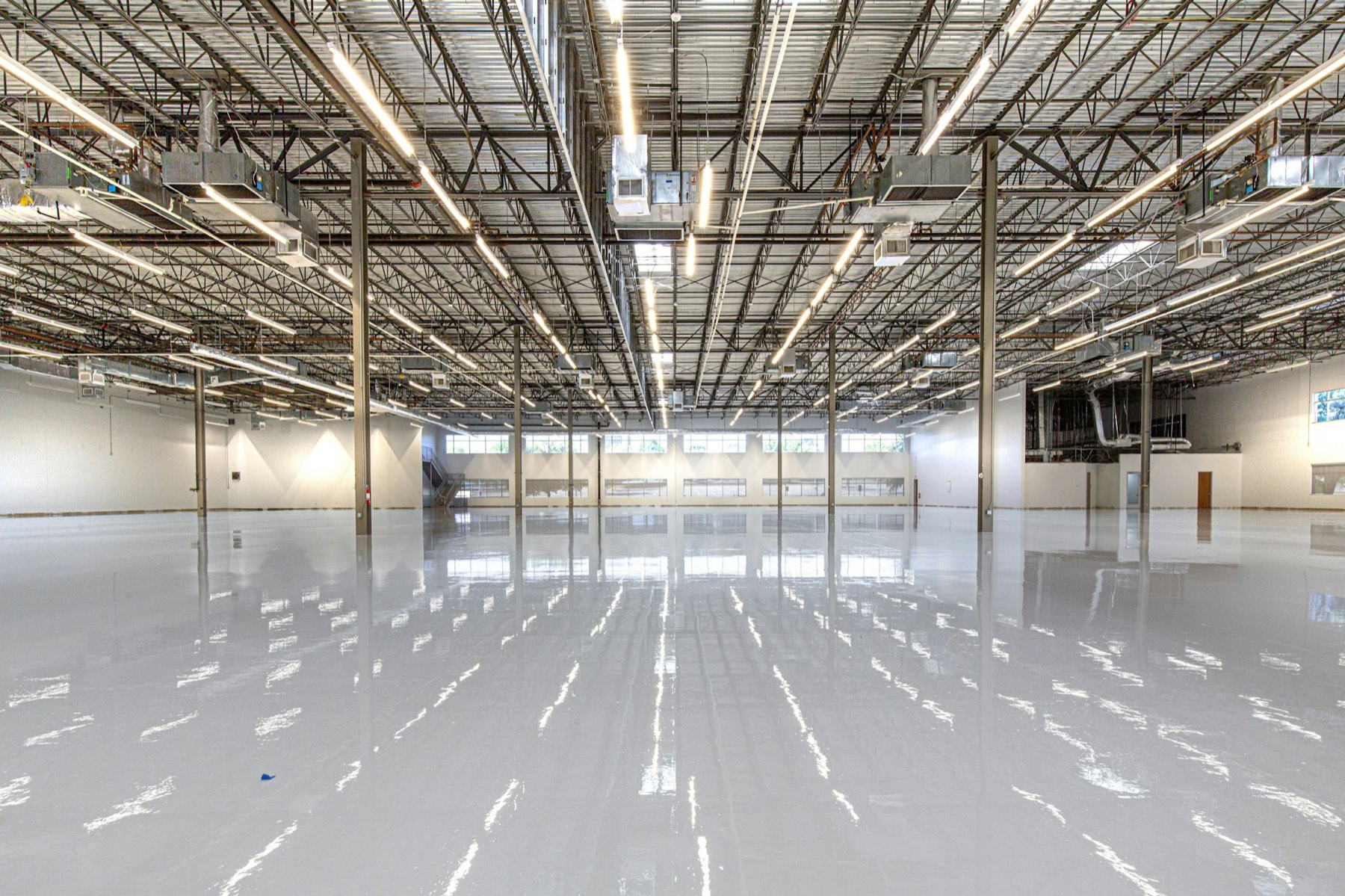
ISO 5, ISO 6, ISO 7 and ISO 8 compared
| ISO class | Max particles ≥0.5 µm per m³ | Old US name | Typical uses (our industry pages) |
|---|---|---|---|
| ISO 5 | 3,520 | Class 100 | Aseptic filling zones; electronics precision assembly |
| ISO 6 | 35,200 | Class 1,000 | Electronics test and inspection; semiconductor packaging and test |
| ISO 7 | 352,000 | Class 10,000 | Medical device assembly and moulding; the area next to an aseptic line (FDA) |
| ISO 8 | 3,520,000 | Class 100,000 | Device, food and cosmetics packaging; gowning rooms |
Each step is ten times at 0.5 µm. The typical uses are starting points from our industry pages; your process owner, customer or regulator sets the class. For the two cleaner classes side by side, see ISO 5 and ISO 6 cleanroom requirements; for the next two, see ISO 7 and ISO 8 cleanroom requirements.
Where ISO 6 is used
| Industry and room | Typical class | Source of the typical value |
|---|---|---|
| Electronics precision assembly | ISO 5–7 | Our electronics industry page |
| Electronics test and inspection | ISO 6–8 | Our electronics industry page |
| Semiconductor process bays | ISO 4–6 | Our semiconductor industry page |
| Semiconductor advanced packaging | ISO 5–6 | Our semiconductor industry page |
| Semiconductor test and inspection | ISO 6–7 | Our semiconductor industry page |
| Area next to an aseptic processing line | At least ISO 7 in operation per FDA; a maker may class it ISO 6 | FDA aseptic guidance 2004, via our ISO 5 and ISO 6 guide |
These are starting points. Your process owner, customer or regulator sets the class for each room.
For electronics, cleanliness is only half the brief: static control is the other. China's electronics cleanroom code GB 50472-2008 lists air cleanliness classes by product in its Appendix A, and ESD-protected rooms need their own surface and grounding plan. See electronics cleanrooms.
State the occupancy state
ISO 14644-1 lets you set the class as-built, at rest or operational. People and equipment add particles, so ISO 6 in operation is harder to hold than ISO 6 at rest. Write the state next to every ISO 6 room, for example "ISO 6, operational, counted at 0.3 and 0.5 µm".
How much air an ISO 6 room needs
ISO 14644-1 sets no air change rate for any class. Trade charts list ISO 6 ranges, but none we checked could be traced to a primary standard, so we do not quote one. The supply air comes from:
- the number of people and what they do;
- process and equipment emissions, and equipment heat;
- the room volume, layout and return-air positions;
- the pressure plan, and how much air leaks out to hold it;
- your recovery target after a disturbance.
The standard does not say whether an ISO 6 room should use unidirectional or mixed airflow; the design review decides, using velocity or air-change targets that are then proved by test. The cost of over-designing is real: a Berkeley Lab study reports that 10% to 30% more airflow raises fan power by about 30% to 120%. See air changes per hour by class and FFU ceiling layout.
Pressure, entry and materials
- Pressure: step the pressure from the ISO 6 room down through the gowning room to the general area. EU GMP Annex 1 gives at least 10 Pa between adjacent rooms of different grade as a guidance value for pharmaceutical rooms; set your own target for other industries and monitor it.
- Entry: people enter through a gowning room. Our electronics and semiconductor pages give gowning at ISO 7–8. See gowning room design.
- Materials: use a pass box or material airlock between ISO 6 and a lower class. See pass boxes.
Testing an ISO 6 room
Classification is a particle count to ISO 14644-1 in the agreed state. The sample volume at each location is 20 ÷ the class limit × 1,000 litres, with a minimum of 2 litres and 1 minute. At ISO 6 and 0.5 µm that is 20 ÷ 35,200 × 1,000 = 0.57 litres, so the 2-litre minimum governs; at 0.1 µm it is 20 ÷ 1,000,000 × 1,000 = 0.02 litres, again below the minimum.
Published summaries of ISO 14644-2:2015 give a maximum of 12 months between particle counts for classes above ISO 5, which includes ISO 6. Other supporting tests (pressure, airflow, filter leakage, recovery) are set out in ISO 14644-3:2019. See validation and handover.
How many locations to sample in an ISO 6 room
ISO 14644-1:2015 sets the minimum number of sampling locations from the room area, in its Table A.1. Divide the room into that many sections of equal area and place one location in each, in the plane of the work activity unless another height is agreed.
| Room area up to | Minimum sampling locations |
|---|---|
| 10 m² | 5 |
| 24 m² | 6 |
| 36 m² | 9 |
| 52 m² | 10 |
| 76 m² | 15 |
| 104 m² | 16 |
| 156 m² | 20 |
| 232 m² | 22 |
| 1,000 m² | 27 |
The table has more steps than shown here; read the line for your exact area. Above 1,000 m², the number is 27 × the area ÷ 1,000, rounded up. These are minimums: add locations at points that matter to the process, such as over a test bench or next to a pass box.
Worked example: a 40 m² ISO 6 assembly room needs at least 10 locations. At 0.5 µm each sample is at least 2 litres and 1 minute. If 1 µm is also a test size, the sample is 20 ÷ 8,320 × 1,000 = 2.4 litres; if 5 µm is counted, 20 ÷ 293 × 1,000 = 68 litres at each location. The room passes when the average count at every location is within the ISO 6 limit for each size tested.
From our factory in China: what we make and supply for an ISO 6 room
We manufacture the wall and ceiling panels and the cleanroom doors in our factory in Tianjin, China. FFUs, HEPA and ULPA filters, air showers, pass boxes and observation windows are supplied in the same quotation and inspected before shipping. On turnkey projects abroad our own crew installs and commissions the HVAC, and we provide the IQ and OQ documents. Where local rules require licensed work, it is done by a licensed local contractor named in the contract. For the panel system, see modular cleanrooms; for one contract from design to tested handover, see turnkey cleanroom.
What to send for a quote
| Send | Why |
|---|---|
| Room list with use, area and ceiling height | Room sizes and panel layout |
| Class, occupancy state and particle sizes per room | Air system and test target |
| Process and equipment list with heat loads | Air volume and cooling |
| People per shift | Gowning size and air load |
| Static-control needs (ESD rooms) | Surfaces, floor and grounding |
| Temperature and humidity bands | Air handling |
| Site country and city | Delivery and site work |
The fastest way to start is to chat on WhatsApp (+44 7962 561184) and send your room list; or use our room list builder and the form below.
Questions
Common questions
What is an ISO 6 cleanroom?
A room whose air holds no more than 35,200 particles of 0.5 µm or larger per cubic metre under ISO 14644-1:2015, with limits at five other sizes from 0.1 to 5 µm. It is the equivalent of the old Class 1,000.
What is an ISO 6 cleanroom used for?
Mainly precision electronics assembly, electronics and semiconductor test and inspection, semiconductor packaging, and some areas next to aseptic processing lines. These are typical classes from our industry pages; your process owner or regulator sets the class of each room.
Is ISO 6 the same as Class 1,000?
Yes, for particles of 0.5 µm and larger: 1,000 per cubic foot is about 35,200 per cubic metre, the ISO 6 limit. The old US standard was cancelled in 2001.
How many air changes per hour does an ISO 6 cleanroom need?
The standard sets none, and we found no primary source for a fixed ISO 6 figure. The air volume comes from people, equipment, room size and the pressure plan, and is proved by a particle count.
What is the difference between ISO 6 and ISO 7?
ISO 6 allows ten times fewer particles: 35,200 per m³ at 0.5 µm against 352,000 for ISO 7. ISO 6 also has limits at 0.1, 0.2 and 0.3 µm, which ISO 7 does not.
Which GMP grade is ISO 6?
None. Under EU GMP Annex 1, Grades A to D are set at the ISO 5, ISO 7 and ISO 8 particle limits, at rest and in operation; no grade uses the ISO 6 limit. A pharmaceutical maker may still class a supporting room ISO 6.
What is the difference between ISO 5 and ISO 6?
ISO 6 allows ten times more particles: 35,200 per m³ at 0.5 µm against 3,520 for ISO 5. ISO 6 also has a limit at 5 µm (293 per m³), where the 2015 table gives ISO 5 none.
How often must an ISO 6 cleanroom be retested?
Published summaries of ISO 14644-2:2015 give a maximum of 12 months between particle counts for ISO 6. Your monitoring plan may set a shorter interval.
How many sampling locations does an ISO 6 cleanroom need?
It depends on the area, not the class. ISO 14644-1:2015 Table A.1 gives, for example, 9 locations for up to 36 m², 10 for up to 52 m² and 27 for up to 1,000 m². Each location's average count must be within the ISO 6 limit.
Do you make ISO 6 cleanrooms in your factory in China?
We make the room envelope: the wall and ceiling panels, the ceilings and the doors are manufactured in our factory in Tianjin, China. FFUs, HEPA and ULPA filters, air showers, pass boxes and observation windows are supplied in the same quotation and inspected before shipping. ISO 6 itself is a test result, not a product: the class is confirmed by a particle count on site once the air system is commissioned.
Related guides
- ISO 5 and ISO 6 cleanroom requirements
- Cleanroom temperature and humidity requirements
- HEPA and ULPA filters: EN 1822, ISO 29463 and integrity testing
- Cleanroom air changes per hour: published values and their limits
- Electronics and PCB cleanrooms
- Turnkey cleanroom contractor
- Room list builder
Sources
- ISO 14644-1:2015, Cleanrooms and associated controlled environments, Part 1: Classification of air cleanliness by particle concentration (published 9 December 2015; checked 31 October 2026)
- FED-STD-209E Notice 1, cancellation notice, November 2001: superseded by ISO 14644-1 and 14644-2 (EverySpec index)
- FDA, Guidance for Industry: Sterile Drug Products Produced by Aseptic Processing, Current Good Manufacturing Practice (September 2004, nonbinding; checked 31 October 2026)
- EudraLex Volume 4, Annex 1: Manufacture of Sterile Medicinal Products (published 25 August 2022; applied from 25 August 2023, and from 25 August 2024 for point 8.123; checked 31 October 2026)
- Tengfang Xu and William Tschudi, Energy Performance of Cleanroom Environmental Systems, LBNL-49106 (November 2001; checked 31 October 2026)
- DIN EN ISO 14644-2:2016-05, Part 2: Monitoring to provide evidence of cleanroom performance (contents)
- ISO 14644-3:2019, Cleanrooms and associated controlled environments, Part 3: Test methods (published August 2019; contents list; checked 31 October 2026)
Project enquiry
Send what you have
A room list, a floor plan or only the floor area is enough to start. After you submit, send drawings by email or WhatsApp.
We reply by email within one working day. We can sign an NDA before you send drawings.
WhatsApp +44 7962 561184 is our UK number for export enquiries. The factory is in Tianjin, China.
Fastest reply: message us on WhatsApp. Or use the form, and add your WhatsApp number so we can reply there.
Email: [email protected]
WhatsApp: +44 7962 561184