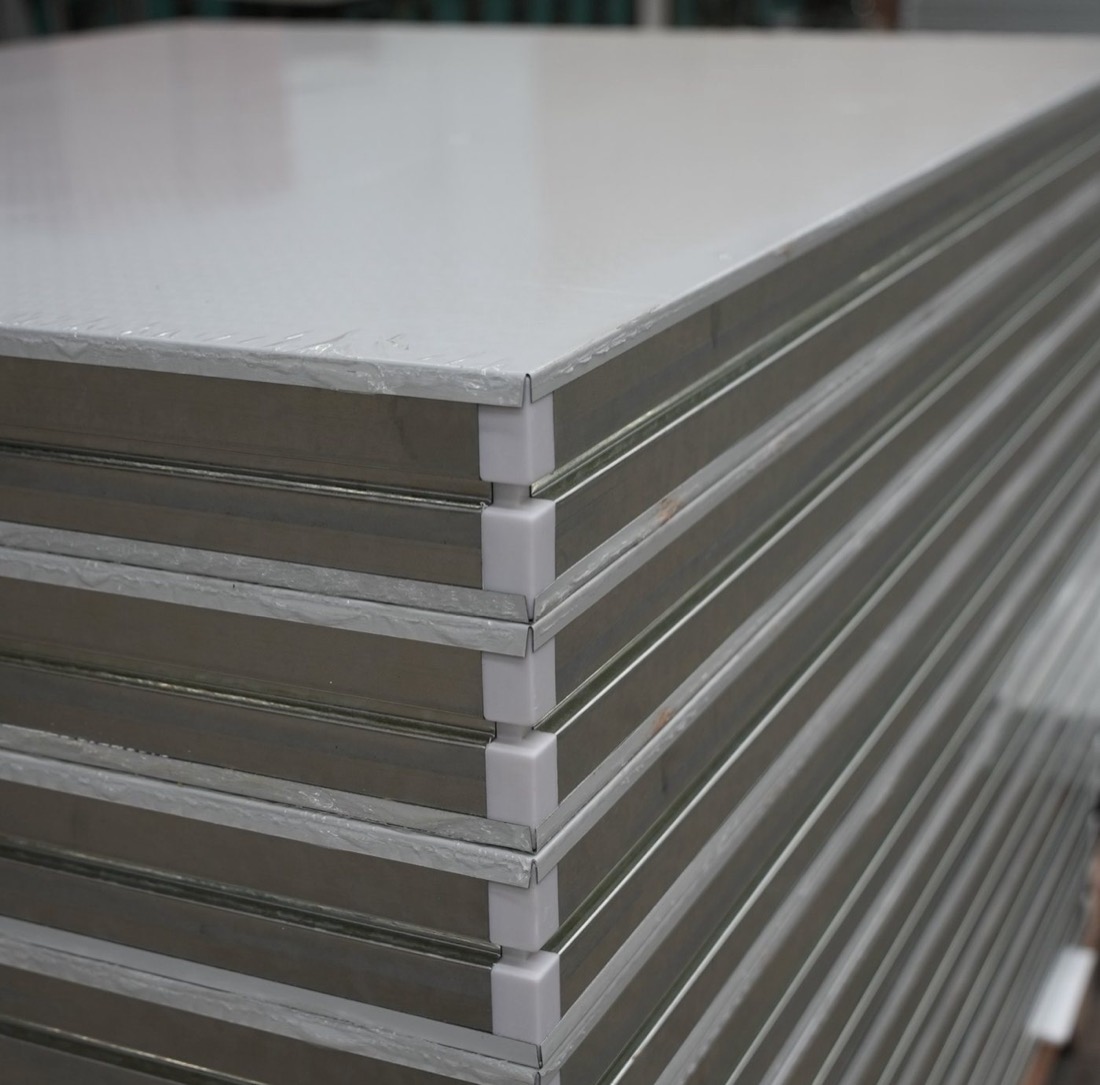
Honeycomb Cleanroom Wall and Ceiling Panels: Paper and Aluminium
Honeycomb panels are cleanroom wall and ceiling panels with metal faces and a paper or aluminium honeycomb core. They are light, which helps on tall walls and ceilings. We make them in our own factory in Tianjin, and buyers compare the core, faces and joints before they order. Paper honeycomb is light and suits dry rooms; check the core treatment, humidity range and fire report for the finished panel. For a ceiling, the core does not set the load: send the spans, supports, openings and whether the ceiling must be walkable.
Best for
- Cleanroom walls
- Cleanroom ceilings with a support design
- Pharmaceutical, food and electronics clean areas
- Hospital and laboratory rooms
Specifications
Typical specification
| Core options | Aluminium honeycomb or paper honeycomb |
|---|---|
| Handmade panel thickness | 50 mm standard |
| Handmade panel width | 1,180 mm standard |
| Handmade panel length | 100–6,000 mm cut length |
| Paper honeycomb panel (separate catalogue configuration) | 50 mm thick, 1,150 mm wide, 1,000–3,600 mm standard length |
| Faces | Colour-coated, galvanized or stainless steel |
| Joints | Centre aluminium connection or male-female |
| Edge frame (handmade) | Galvanized steel frame strips and corner fittings on all four edges |
| MgO-faced versions | MgO board layers with aluminium honeycomb, or with paper honeycomb, confirmed on the assembly drawing |
| Ceiling use | Core and thickness do not set a walk-on rating; request load and deflection data for the assembly |
| Fire documents | Ask for the report that names the honeycomb core and covers the finished panel at the quoted thickness |
Options
What you can specify
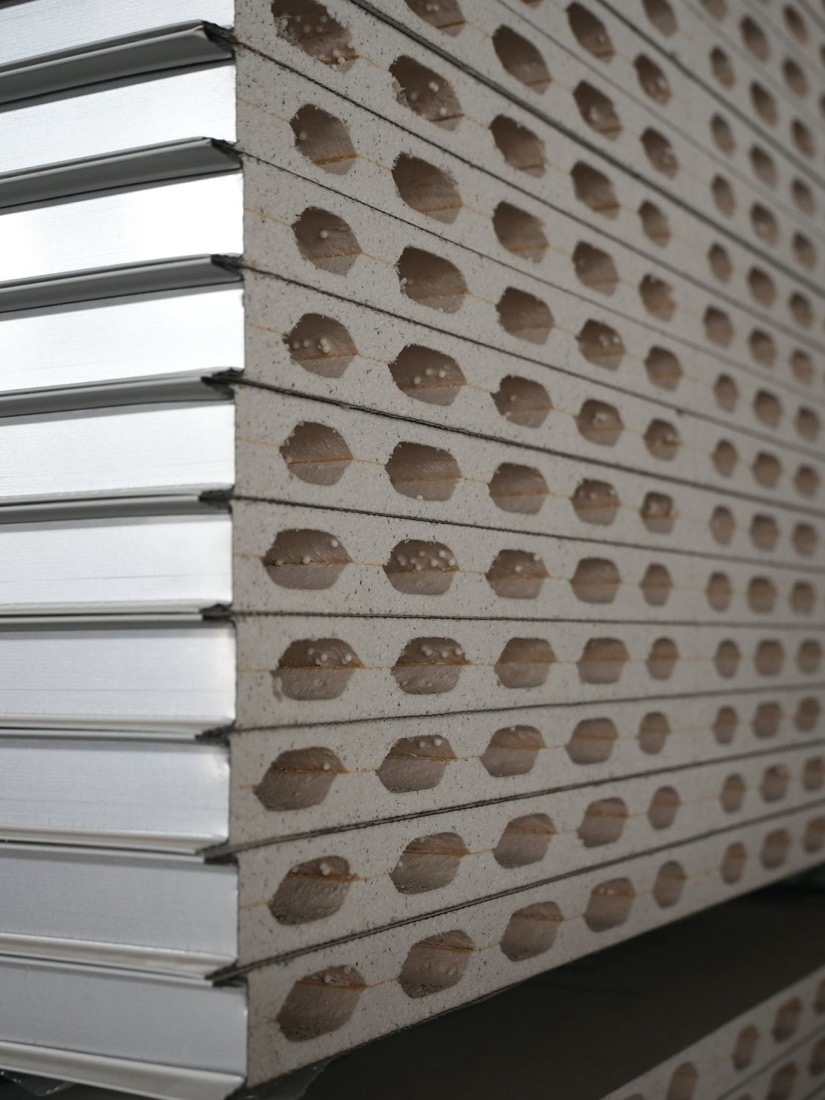
- Aluminium honeycomb core
- Paper honeycomb core
- Colour-coated, galvanized or stainless steel faces
- Centre aluminium or male-female joint
- Cut lengths to your panel schedule
- MgO board layers under the steel faces
- Honeycomb door leaf core for matching cleanroom doors (paper or aluminium)
Paper or aluminium honeycomb?
They are separate core selections, and their specifications are not interchangeable.
| Paper honeycomb | Aluminium honeycomb | |
|---|---|---|
| Core | Hexagonal paper cells bonded between two facings | Aluminium cells bonded between two facings |
| Sizes we list | Handmade family 1,180 × 50 mm, 100–6,000 mm long; or the separate paper honeycomb configuration 1,150 × 50 mm, 1,000–3,600 mm long | Handmade family 1,180 × 50 mm, 100–6,000 mm long |
| Sensitive to | Humidity and fire, unless treated | Confirmed on the quotation |
| Ask for | Paper type, impregnation, humidity range, fire treatment, sealed edges | Cell size, foil thickness, bonding |
| Fire class | Only the report on the finished panel decides | Only the report on the finished panel decides |
Paper honeycomb wall panel core: what we confirm on the quotation
For a paper honeycomb wall, the quotation and section drawing state:
| Item | What you get |
|---|---|
| Family and size | Handmade 1,180 × 50 mm, 100–6,000 mm, or paper honeycomb configuration 1,150 × 50 mm, 1,000–3,600 mm |
| Faces | Colour-coated, galvanized or stainless steel, with thickness and finish on each side |
| MgO layer | Whether an MgO board layer sits under the steel faces |
| Edges | Galvanized steel frame strips and corner fittings on all four edges (handmade family) |
| Joint | Centre aluminium connection or male-female |
| Core | Paper type, impregnation and fire treatment, as offered |
| Openings | Door, window and pass box openings framed at the factory; our door and window frames are listed for 50, 75 and 100 mm walls |
Before you choose paper honeycomb for a wall, check the room. Dry rooms such as electronics assembly and many laboratories are worth comparing. For wash-down or humid rooms, compare rock wool first. Our paper honeycomb wall and ceiling panels guide explains why humidity and fire treatment matter for a paper core.
Paper honeycomb wall and ceiling panels: what to check
Paper honeycomb is light, but paper reacts to moisture and fire. Two published studies show why the core needs its own checks:
- A review in the journal Materials (2020, 13(9):2058) reports that the compressive strength of paper cell cores in humid conditions can fall to 25% of the dry value. That was a test of cores, not of wall panels.
- A 2010 paper in the Journal of the Korean Institute of Fire Science and Engineering compared four fire treatments for honeycomb paper. Impregnation with flame retardant performed best; a surface film delayed ignition but worsened heat and smoke release.
So ask the supplier, for the exact panel offered:
1. What paper the core is, and whether it is impregnated. 2. What humidity range the core is rated for. 3. How the core is fire-treated. 4. Which fire report covers the finished panel. 5. How cut edges and openings are sealed. EU GMP Annex 1 (para 4.7) asks for room materials that can take repeated cleaning and disinfectants, so a liquid must not reach the core.
Walls and ceilings are different jobs
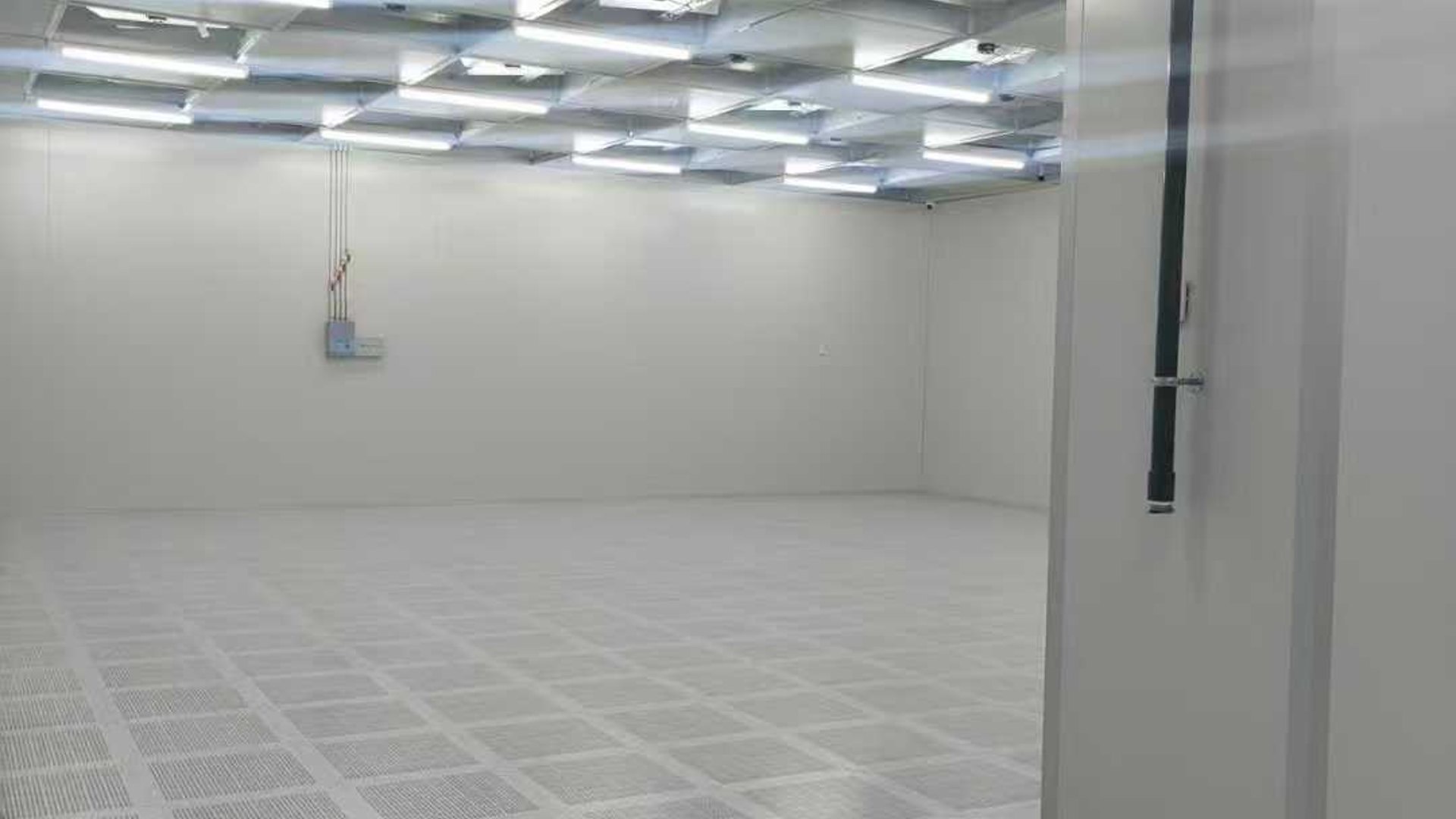
Walls. The light core makes tall walls easier to stand and fix. Openings for doors, windows and pass boxes are planned with the panel layout, and our door and window frames are listed for 50, 75 and 100 mm walls.
See cleanroom wall panels for the whole wall system, and all cleanroom sandwich panels.
Paper honeycomb ceiling panels: hung, self-supporting or walkable
A honeycomb ceiling panel is light, which helps the hangers and the installers, but the ceiling is an assembly. Tell us which of these you need:
| Ceiling type | What it is | What to send |
|---|---|---|
| Hung panel ceiling | Panels hung from the structure above on rods and brackets | Support positions, ceiling and void heights, FFU and light openings |
| Self-supporting ceiling | Panels span from wall to wall without hangers in the room | Room widths (the spans), openings, fixed loads; ask for span and deflection data for the exact panel |
| Walkable ceiling | Maintenance staff work from the void above | The walking load you need, access points and the fixed loads; we make walkable sandwich panel ceilings to the stated load and confirm the core and build-up |
A honeycomb core or a 50 mm thickness does not make a ceiling walkable or self-supporting by itself. Load and deflection data must be for the exact assembly. See cleanroom ceiling systems.
How to choose a honeycomb core
Aluminium honeycomb and paper honeycomb are separate selections. Their specifications are not interchangeable. For either one, ask for the core specification, the cell dimensions with units, the face sheets, the backing and the bonding.
For paper honeycomb, also ask for the core treatment, the sealed edges, and the cleaning and moisture-use limits. Compare assembly drawings, panel mass per m² and the fire-test report for the exact build. A core name does not set fire rating or moisture resistance.
Where honeycomb panels are used
Honeycomb panels are chosen where a light wall or ceiling helps and the room is dry. Typical uses:
| Application | Why honeycomb | What to check |
|---|---|---|
| Electronics assembly rooms | Dry rooms, where a light paper or aluminium core is worth comparing | The fire report that names the core |
| Laboratories | Many laboratories are dry rooms | The cleaning agents and the humidity range of the core |
| Pharmaceutical, food and hospital clean areas | Light walls with smooth steel faces | Which rooms are washed down; for those, compare rock wool first |
| Tall walls | The light core makes tall walls easier to stand and fix | Wall heights against the listed cut lengths |
| Hung and self-supporting ceilings | A light panel helps the hangers and the installers | Span and deflection data for the exact panel |
| Doors in the same rooms | Our door leaves can have a paper or aluminium honeycomb core | Frames for 50, 75 and 100 mm walls |
How honeycomb compares with the other cores we make
| Core | Fire note | Weight | Insulation | Use it when |
|---|---|---|---|---|
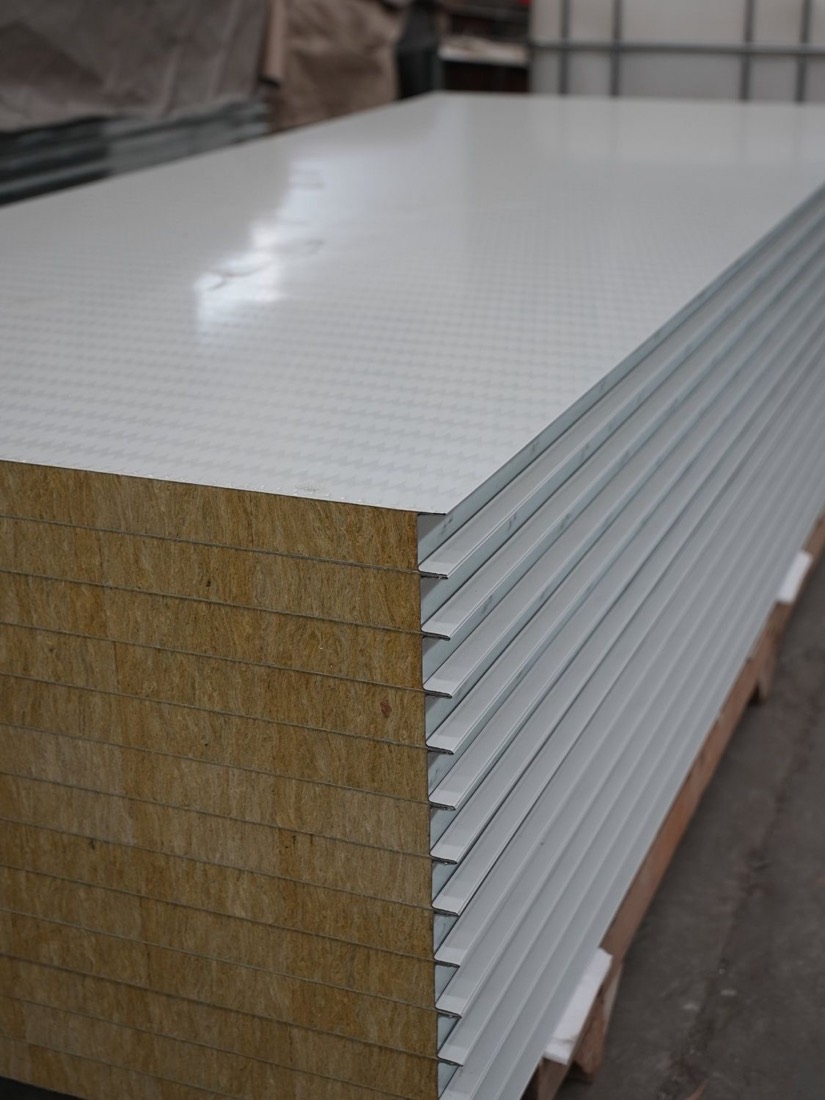
| Rock wool | Non-combustible mineral core | Heaviest of the mineral cores | Better than hollow MgO | A combustible core is not allowed and insulation matters |
| Hollow MgO | Non-combustible inorganic core | Medium | Moderate | You want a lighter non-combustible panel in a dry room |
| PU | Organic foam; class depends on formulation and test | Light | Used for insulation-led rooms | Insulation is the main need and fire rules allow foam |
| Honeycomb (aluminium or paper) | Depends on the core | Light | Confirmed on the quotation | Light partitions and ceilings with a support design |
Fire rules set the shortlist. A core name does not give a fire rating. The rating belongs to the tested panel, so ask for the report that covers the faces, core and thickness on your quotation. For the Euroclass system, see our panel selection guide.
In short: honeycomb and PU are the light cores, and rock wool and hollow MgO are the non-combustible ones. For a paper core, the fire class and the humidity range come only from the report and data for the finished panel.
Installation notes for honeycomb panels
The panels go up in the usual order for a panel cleanroom: floor and base track, wall panels, corners, ceiling, doors and windows, then lights, filters and penetrations, and a final seal and leak test. Each step and its check are in our cleanroom panel installation guide. The points that matter most for this core:
- Count by family. Set out the handmade family at 1,180 mm and the paper honeycomb configuration at 1,150 mm; mixing them gives wrong quantities.
- Plan openings before cutting. Door, window and pass box openings are framed at the factory. If an opening has to be cut on site, seal its edges so no liquid reaches the core.
- Seal cut edges and joints. Seal cut edges, openings and the room-side joints with a sealant that tolerates the cleaning agents, because EU GMP Annex 1 (para 4.7) asks for materials that take repeated cleaning.
- Stand tall walls plumb. Fix each panel plumb in the floor track with even joint gaps before the corners and ceiling go in.
- Build the ceiling as designed. Hang it on the support positions in the design, and walk only on a ceiling designed as walkable.
On turnkey contracts our own crew installs the panels, doors and ceilings. On supply-only orders your crew installs them with our numbered layout drawing and installation guide, and our engineer can join a WhatsApp video call to check set-out and the first panels.
What goes wrong on site
Two sizes are listed. The handmade family is 1,180 mm wide; the separate paper honeycomb configuration is 1,150 mm wide. Mixing them gives wrong quantities.
A honeycomb core or a panel thickness does not make a ceiling walkable. Ask for load and deflection information for the exact assembly. Ask for fire and other performance reports for the exact faces, core, backing and thickness offered. The panel core does not set the room's cleanliness class.
Packing and shipping to your site
Panels and doors are manufactured in our Tianjin factory, cut to length, numbered to the layout drawing and packed on timber pallets. The packing list follows the panel numbering, so each pallet can be matched to a zone of the layout on arrival. Other equipment is inspected before shipping, and your inspection company can check the goods before loading.
State the freight term and the port or site city in the quotation, and ask your broker to confirm the customs code before shipment. See how to import a cleanroom from China.
How to ask for a quotation: what to send
Send wall and ceiling schedules separately. Give the destination, the preferred core, dimensions, face requirements, joint details, the cleaning agents used in the room and the reports you need. For ceilings, add support positions, spans, penetrations, equipment loads and maintenance access. State the packing, shipping and installation scope you want priced.
Build the room list in our room list builder: area, target class or condition and pressure for each room. Send it with the items above on WhatsApp (+44 7962 561184) or through the form below. We reply with a scope list and a first budget range; the price is confirmed in a written quotation.
Quote checklist
| Send | Why |
|---|---|
| Core: paper or aluminium | Separate products |
| Family: handmade 1,180 mm or paper honeycomb 1,150 mm | Counting with the wrong width gives the wrong quantity |
| Wall schedule and ceiling schedule, separately | Ceilings need a support and load check |
| Faces: metal, grade, thickness, finish | Colour-coated, galvanized or stainless |
| Joint: centre aluminium or male-female | Changes trims and sealing |
| Room humidity and cleaning agents | Decides paper suitability and edge sealing |
| Ceiling supports, spans, FFU and light openings | For the load and deflection check |
| Reports you need | Fire report naming the core |
| Destination and installation scope | Packing, freight and site support |
Cleanroom panel selection: core materials compared
How to Choose a Cleanroom Panel Manufacturer in China
Cleanroom sandwich panels for Saudi Arabia and the UAE: types, supply and installation
Questions
Common questions
Should I choose aluminium or paper honeycomb?
They are separate core selections and are not interchangeable. Ask for the core specification, cell dimensions, face sheets, backing and bonding for either one, then compare assembly drawings, panel mass per m² and the applicable fire-test report.
What are the standard honeycomb panel dimensions?
The handmade family lists 50 mm thickness, 1,180 mm width and cut lengths from 100 to 6,000 mm. A separate paper honeycomb configuration lists 50 mm thickness, 1,150 mm width and 1,000 to 3,600 mm length. Confirm the offered size in the quotation.
Can honeycomb ceiling panels be walked on?
A core or a thickness alone does not give a walk-on rating. Send support positions, spans, penetrations, equipment loads and access needs, and ask for assembly-specific load and deflection data.
Which faces and joints are available?
Colour-coated, galvanized and stainless steel faces, with a centre aluminium connection or a male-female joint. State the metal grade, thickness, finish and the cleaning agents used in the room.
Is a paper honeycomb panel suitable for a humid or wash-down room?
Ask for the core's humidity rating and how cut edges are sealed. A 2020 review found paper cores can lose up to 75% of their dry compressive strength in humid conditions. For wash-down rooms, compare a mineral core such as rock wool before you decide.
Do you make doors with a honeycomb core to match?
Yes. Our cleanroom door leaves can have a paper honeycomb, aluminium honeycomb or rock wool core, with frames for 50, 75 and 100 mm panel walls. See cleanroom doors.
Can paper honeycomb panels be used for cleanroom walls?
Yes, in dry rooms where the fire rules allow it and the finished panel has a fire report. Ask for the paper type, impregnation, humidity range and how cut edges and openings are sealed. For wash-down rooms, compare rock wool first.
Can honeycomb panels make a self-supporting cleanroom ceiling?
Only if the exact panel is checked for the span. Send the room widths, openings and fixed loads, and ask for span and deflection data for the assembly. The core or thickness alone does not decide it.
Do you make the honeycomb panels yourselves?
Yes. We manufacture paper and aluminium honeycomb panels, including MgO-faced versions, in our factory in Binhai New Area, Tianjin, and honeycomb door leaves for matching cleanroom doors.
Where are honeycomb cleanroom panels used?
Where a light wall or ceiling helps and the room is dry: electronics assembly rooms, many laboratories, dry pharmaceutical, food plant and hospital clean areas, tall walls, and hung or self-supporting ceilings checked for the span.
How do honeycomb panels compare with rock wool, MgO and PU panels?
Honeycomb and PU are the light cores; rock wool and hollow MgO are non-combustible. A paper core reacts to moisture and fire, so its fire class comes only from the report for the finished panel. See the panel selection guide.
How are honeycomb panels installed?
In the usual panel order: floor track, walls, corners, ceiling, doors and windows, penetrations, then the final seal. Count panels by family, seal cut edges and openings so no liquid reaches the core, and hang ceilings on the designed supports. On turnkey contracts our own crew installs; on supply-only orders your crew works from our numbered drawings and installation guide.
How are honeycomb panels packed for shipping?
Cut to length, numbered to the layout drawing and packed on timber pallets, with a packing list that follows the panel numbering. Your inspection company can check the goods before loading. See how to import a cleanroom from China.
Project enquiry
Send what you have
A room list, a floor plan or only the floor area is enough to start. After you submit, send drawings by email or WhatsApp.
We reply by email within one working day. We can sign an NDA before you send drawings.
WhatsApp +44 7962 561184 is our UK number for export enquiries. The factory is in Tianjin, China.
Fastest reply: message us on WhatsApp. Or use the form, and add your WhatsApp number so we can reply there.
Email: [email protected]
WhatsApp: +44 7962 561184