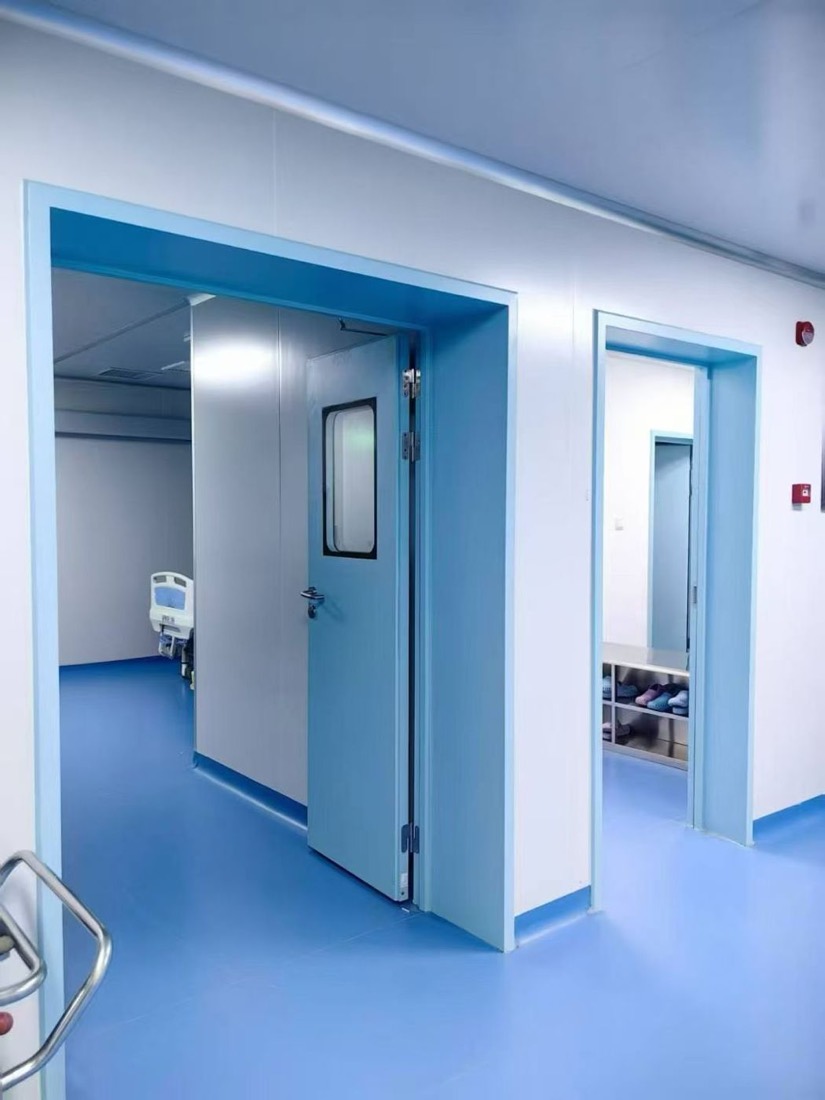
Hermetic Sliding and Swing Doors for Cleanrooms and Operating Rooms
Hermetic doors are cleanroom doors with seals made for low leakage when closed, for rooms that must hold their pressure. We make them in our own factory in Tianjin as sliding or swing doors, manual or automatic, for cleanroom panel walls and for brick or block openings. They are used in operating rooms, isolation rooms, pharmaceutical cleanrooms and laboratories.
Best for
- Operating rooms and theatre suites
- Isolation rooms, negative or positive pressure
- Pharmaceutical cleanrooms and airlocks
- Laboratories with sealed rooms
Specifications
Typical specification
| Door types | Hermetic sliding (single leaf or bi-parting); hermetic swing (single or double leaf) |
|---|---|
| Operation | Manual or automatic |
| Activation (automatic) | Hands-free sensor, foot switch, elbow switch, no-touch switch, push button, card reader; key or keypad lock-out |
| Wall types | Cleanroom sandwich panel walls of 50, 75 or 100 mm; measured brick or block openings |
| Frames | Steel, stainless steel or aluminium |
| Leaf faces | Stainless steel, colour-coated galvanized steel or HPL |
| Leaf core | Paper honeycomb, aluminium honeycomb, or rock wool where a non-combustible core is specified |
| Seals | Perimeter seals and bottom seal |
| Sliding track | Surface-mounted, top-hung; no floor track |
| Vision panel | Double-glazed, flush in the leaf, rounded or square edges |
| Controls | Interlock interface for airlocks; status lights; emergency release; behaviour on power loss set per door |
| Fire-rated versions | Rating needs evidence for the complete door assembly |
| Sizes | Made to your door schedule |
Options
What you can specify
- Sliding or swing; single, double or bi-parting leaves
- Manual, or automatic with the activation you choose on each side
- Stainless steel, colour-coated steel or HPL faces
- Flush double-glazed vision panel, with a cover where lasers are used
- Interlock with other doors of an airlock, with a delay
- Power-loss mode: stay closed, open, or free to push
- Frames for panel walls or measured masonry openings
Hermetic sliding door system or swing door
| Hermetic sliding | Hermetic swing | |
|---|---|---|
| Space | Wall space beside the opening | Swing arc on the opening side |
| Pressure | Presses the leaf onto its seals; the drive does not open against it | Helps hold the door shut when it opens to the high-pressure side |
| Hands-free | Usually automatic | Automatic operator, or push plates |
| Wide beds and trolleys | Bi-parting leaves | Double leaf |
| Cleaning | Top track only; ask how the track cover and seal line are cleaned | Fewest moving parts |
| Typical place | Theatre main entrance, corridors | Isolation rooms, airlocks, where a local code asks for swing doors |
For automatic doors, the activation, interlocks and power-loss modes are explained in the guide to automatic sliding cleanroom doors.
Where hermetic doors are used
| Room | Why the door must hold pressure | Read more |
|---|---|---|
| Operating room | UK guidance sets 25 Pa for the theatre and 35 Pa for the preparation room | Operating theatre doors |
| Isolation room | −5 Pa to the general area in UK guidance; more negative than 2.5 Pa in US guidance for new rooms | Isolation room design |
| Pharmaceutical cleanroom | At least 10 Pa between adjacent grades (EU GMP Annex 1 guidance value); airlock doors interlocked | Pressure differentials |
| Laboratory | BSL-3 rooms need gaps around doors that can be sealed | BSL-3 laboratory design |
The sources for these values, and how to write a leakage limit into a door schedule, are in our guide on how to specify hermetic door leakage.
Hermetic door specification by room
The room sets the starting point; the pressure plan, traffic and fire strategy decide the final door. Every door is made to your door schedule.
| Room | Usual hermetic door | Operation | What to state in the door schedule |
|---|---|---|---|
| Operating theatre, main entrance | Hermetic sliding, single leaf, or bi-parting for wide bed openings | Automatic: hands-free sensor, foot or elbow switch | Clear opening from the local rule and the bed size; theatre pressure; leakage limit |
| Scrub room to theatre | Hermetic sliding or swing | Automatic, or with push plates | Activation positions on the drawing |
| Isolation room | Hermetic sliding or swing, self-closing | Manual or automatic | Negative or positive pressure; power-loss mode |
| Pharmaceutical cleanroom and airlock | Hermetic sliding or swing | Interlocked with the other doors of the airlock, with a delay where needed; status lights | Grade on each side and the interlock group |
| Laboratory with sealed rooms | Hermetic swing or sliding | Manual or automatic | Pressure difference, which side is higher, and the leakage limit |
Leaf faces are stainless steel, colour-coated galvanized steel or HPL, chosen by the disinfectants used and the impact from beds and trolleys. The vision panel is double-glazed and flush in the leaf, with a cover where lasers are used.
Hospital doors: sizes, materials and specifications
In hospitals, hermetic doors go where a room must hold its pressure, such as operating theatres and isolation rooms. There is no single international hospital door size: use the rules of the country where the hospital is built and the widest bed or trolley on the route. Dubai Health Authority (DHA) guidance, for example, recommends these minimum clear openings:
| Room or use (DHA guidance) | Recommended minimum clear opening |
|---|---|
| Patient bedrooms, new areas (bed movement) | 1400 mm wide × 2140 mm high |
| Patient bedrooms, renovated areas | Not less than 1200 mm wide × 2040 mm high |
| Rooms needing stretcher or wheelchair access | 900 mm wide |
| Rooms needing hoists or shower trolleys | 1000 mm wide |
Write the clear opening in the door schedule, not the leaf size. For materials, our leaves have stainless steel, colour-coated galvanized steel or HPL faces, chosen by the disinfectants used and the impact from beds and trolleys. See operating theatre doors and the door size guide.
Unlike hospital door manufacturers that make doors only, we make the hermetic doors and the cleanroom panel walls they sit in, in the same factory in Tianjin.
How a hermetic door is installed
- Confirm the opening: clear passage, construction opening, external frame size and leaf size, kept as separate numbers. The construction opening comes from the frame drawing of the offered door.
- Match the frame to the wall: frames for 50, 75 and 100 mm panel walls, or a frame detailed for a measured brick or block opening.
- Install in sequence: after the wall panels, corners and ceiling, and before lights, filters and the final seal.
- Fix the frame plumb, square and flush with the panel face, and seal it to the wall all round, on both faces.
- Fit the perimeter and bottom seals, then set the sliding track or the swing hardware against the room pressure.
- On automatic doors, set the activation on each side, the interlock group and the power-loss mode, and test the emergency release.
- Check that the room holds its design pressure with the doors closed, and put the door drawings as installed, the operating and maintenance instructions and any test reports into the handover file.
On turnkey contracts our own crew installs the doors with the panels and ceilings. On supply-only orders your crew installs them with our door drawings and installation guide, and our engineer can join a WhatsApp video call to check set-out and the first openings. Each step is explained in the cleanroom door installation guide.
Packing and shipping to your site
Hermetic doors are made in our Tianjin factory to your door schedule. When the doors come with the panels, the frames are made for the panel thickness ordered, the openings are cut in the panels at the factory, and doors, panels and windows are packed and listed by door mark in one shipment, with the door drawings and installation guide. Your inspection company can check the goods before loading.
State the freight term and the port or site city in the quotation, and ask your broker to confirm the customs code before shipment. See how to import a cleanroom from China.
How to ask for a quotation: what to send
For each door mark: room on each side, pressure difference and which side is higher, leakage limit if the design sets one, sliding or swing, manual or automatic, activation on each side, clear opening, wall type and thickness (or measured masonry opening), leaf face, vision panel, interlock group, power-loss mode, fire rating if needed, and the destination country. A filled-in example is in the operating theatre doors guide; tender text is on the cleanroom doors page.
Send the door schedule on WhatsApp (+44 7962 561184) or through the form below. If the doors are for new rooms, our room list builder sets out the rooms, classes and pressures first. We reply with the door list we propose; the price is confirmed in a written quotation.
How to Specify a Hermetic Door: When It Must Hold Room Pressure
Automatic Sliding Cleanroom Doors: Activation, Interlocks and Specification
Questions
Common questions
What is a hermetic door?
A door with seals made for low leakage when it is closed, used where a room must hold its pressure. Specify it by the pressure difference and the leakage limit, and ask for leak test data on the complete door. See how to specify hermetic door leakage.
How does a hermetic door seal?
With perimeter seals and a bottom seal. On a sliding door, room pressure presses the leaf onto its seals; on a swing door, pressure helps hold the door shut when it opens towards the higher-pressure side.
Do you make hermetic sliding doors?
Yes. We make hermetic sliding doors, single leaf or bi-parting, manual or automatic, in our own factory in Tianjin. We also make hermetic swing doors.
Can hermetic doors be fitted in brick or block walls?
Yes. Send the measured opening, the wall thickness with finishes and photographs; the frame is detailed for that wall. For panel walls, frames are made for 50, 75 and 100 mm panels.
How do automatic hermetic doors open?
By the activation you choose for each side: hands-free sensor, foot, elbow or no-touch switch, push button or card reader. The power-loss mode and emergency release are set per door.
Are hermetic doors fire rated?
Only where the complete door assembly has been tested for it. Tell us the rating your project needs.
What sets the price of a hermetic door?
The specification: sliding or swing, single, double or bi-parting leaves, size, manual or automatic operation and the activation on each side, leaf faces and core, vision panel, seals, interlock and power-loss mode, fire rating if needed, quantity and documents. The price is confirmed in a written quotation from your door schedule.
Where are hermetic doors used?
Where a room must hold its pressure: operating rooms and theatre suites, isolation rooms under negative or positive pressure, pharmaceutical cleanrooms and airlocks, and laboratories with sealed rooms.
How is a hermetic door installed?
After the wall panels, corners and ceiling, and before lights, filters and the final seal. The frame is fixed plumb and flush with the panel face and sealed all round; then the seals, activation, interlock and power-loss mode are set and tested, and the room pressure is checked with the doors closed. See the door installation guide.
Can hermetic doors be interlocked in an airlock?
Yes. The doors have an interlock interface for airlocks, so the doors of one airlock do not open at the same time, with a delay where the design sets one. EU GMP Annex 1 (para 4.13) asks for an interlocking system on airlocks into Grade A and B areas.
How are hermetic doors shipped?
From our factory in Tianjin, with the panels for the same rooms when they are ordered together: packed and listed by door mark, with the door drawings and installation guide. Your inspection company can check the goods before loading.
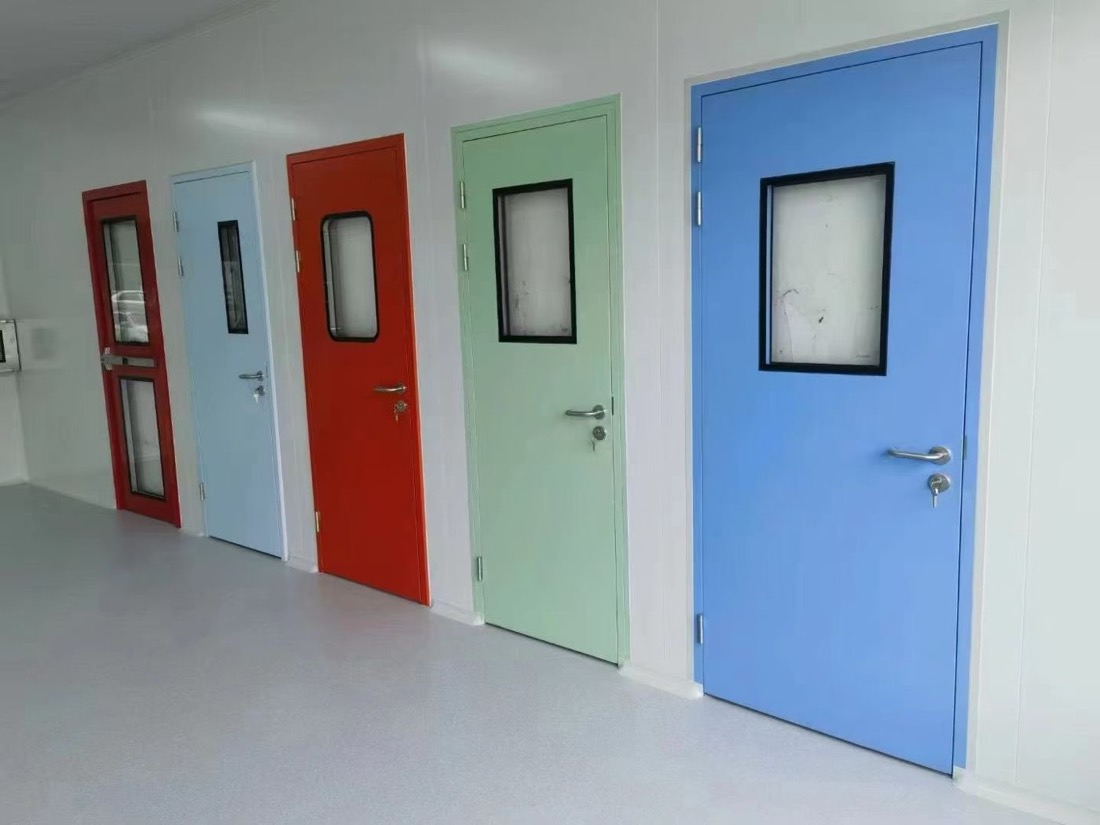
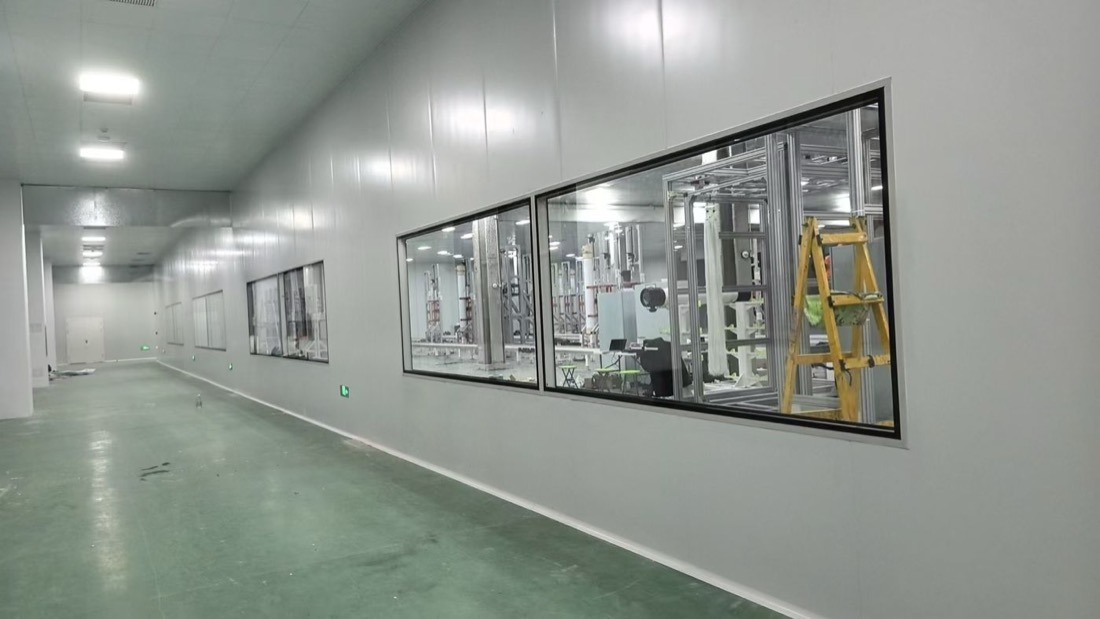
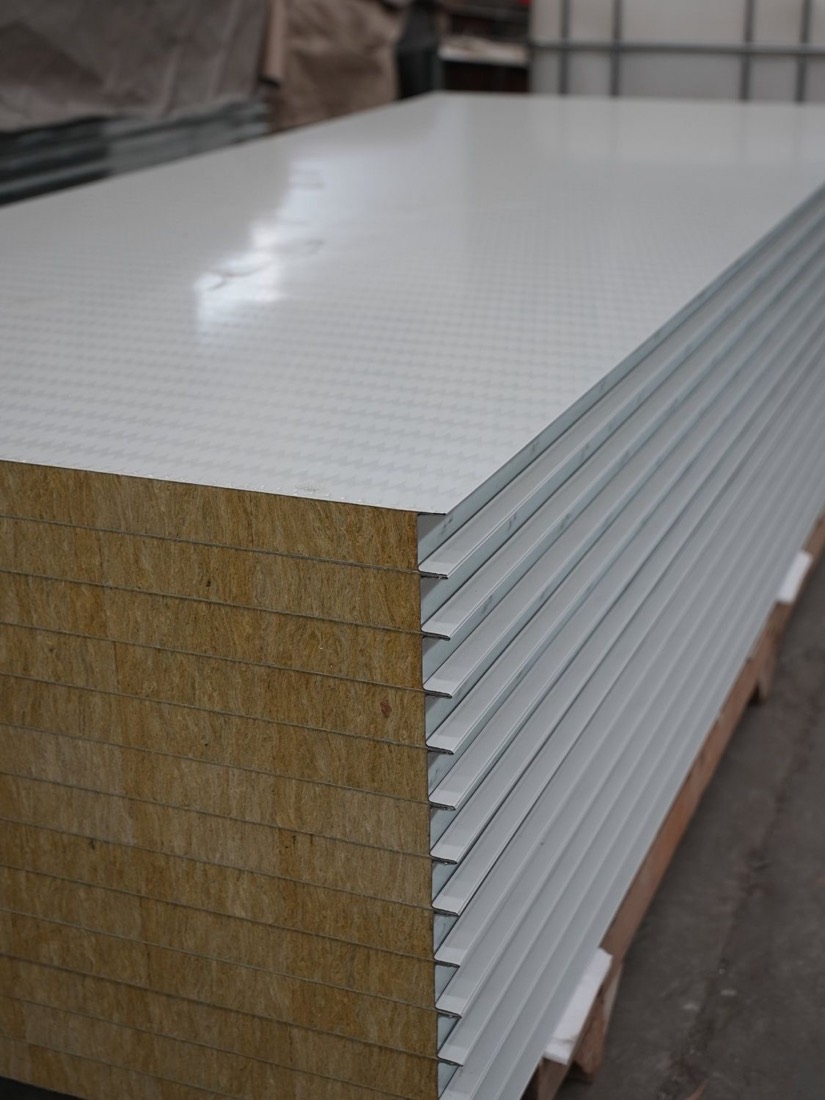
Project enquiry
Send what you have
A room list, a floor plan or only the floor area is enough to start. After you submit, send drawings by email or WhatsApp.
We reply by email within one working day. We can sign an NDA before you send drawings.
WhatsApp +44 7962 561184 is our UK number for export enquiries. The factory is in Tianjin, China.
Fastest reply: message us on WhatsApp. Or use the form, and add your WhatsApp number so we can reply there.
Email: [email protected]
WhatsApp: +44 7962 561184