Buyer guide
Class 100K Assembly and Moulding Cleanrooms: Class 100,000 (ISO 8)
A Class 100,000 cleanroom is an ISO 8 room: no more than 3,520,000 particles of 0.5 µm or larger per cubic metre, which is 100,000 per cubic foot under the old US standard. It is the class most often named for assembly, moulding, packaging and gowning rooms in device, electronics, cosmetics and food work, while products with closer contact to the body or tighter yield needs move up to ISO 7. The class is a particle limit only; air volume, layout and gowning come from your process.
By ZY Cleanroom · Updated · Sources at the end of the page
Class 100,000 in numbers
| Particle size | ISO 8 (Class 100,000), particles per m³ |
|---|---|
| 0.5 µm and larger | 3,520,000 |
| 1 µm and larger | 832,000 |
| 5 µm and larger | 29,300 |
Source: ISO 14644-1:2015, Table 1. The limits are cumulative. "Class 100k" and "Class 100,000" both mean ISO 8. FED-STD-209E, the standard that used these names, was cancelled in November 2001 and replaced by ISO 14644-1 and 14644-2.
Write the occupancy state next to the class: as-built, at rest or operational. An assembly room full of people and a moulding hall with machines running are harder to hold in operation than at rest.
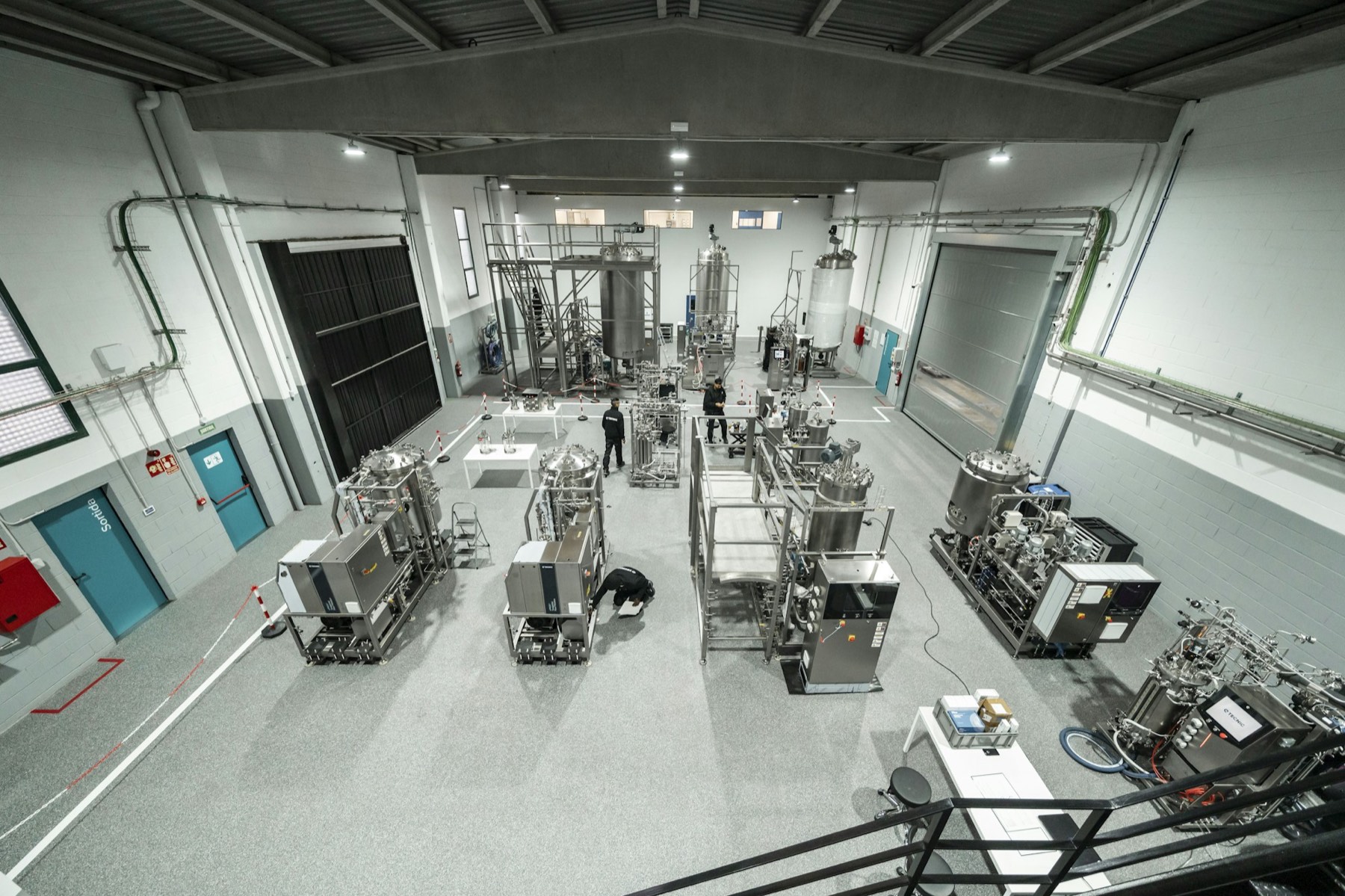
Where Class 100,000 is used for assembly and moulding
| Industry and room | Typical class | Source of the typical value |
|---|---|---|
| Medical device assembly | ISO 7–8 | Our medical device industry page |
| Injection moulding of device parts | ISO 7–8 | Our medical device industry page |
| Sterile barrier packaging | ISO 7–8 | Our medical device industry page |
| Electronics test and inspection | ISO 6–8 | Our electronics industry page |
| Electronics packaging | ISO 7–8 | Our electronics industry page |
| Cosmetics compounding and packaging | ISO 8 | Our cosmetics industry page |
| Food packaging room | ISO 8 | Our food industry page |
| Gowning for most of the above | ISO 7–8 or ISO 8 | Our industry pages |
These are starting points, confirmed with your process, product and regulator.
For sterile medical devices in China, the NMPA annex (Announcement 2015 No. 101) sets Class 100,000 as the minimum for final cleaning, assembly, primary packing and sealing of devices that contact blood, bone marrow or non-natural openings (clause 2.2.4), and Class 10,000 (ISO 7) for devices implanted or placed in blood vessels (clause 2.2.3). Other markets have their own rules.
In pharmaceutical work, EU GMP Annex 1 grades are used instead: Grade D is ISO 8 at rest, and Grade C is ISO 8 in operation. A GMP grade is not one ISO class. See GMP grades vs ISO classes.
Assembly rooms: people set the load
In an assembly room most particles come from people. Plan:
- Gowning: a gowning room on the way in, sized for the number of operators at shift change. See gowning room design.
- Material entry: a pass box or material airlock, so parts and packaging enter without opening the room. See pass boxes.
- Pressure: a step from the assembly room down to the gowning room and then to the general area. For sterile devices in China, the NMPA annex asks for more than 5 Pa between rooms of different class and more than 10 Pa to outdoors (clause 2.2.2).
- Benches: if one task needs cleaner air than the room, a clean bench over that work zone can give it local protection. See clean benches.
Moulding rooms: machine heat sets the air
In a moulding room, machine heat often decides the air volume before particle control does. Three layouts are compared: the whole machine inside the room, only the mould area under a clean zone, or the mould end through the wall. No standard requires one of them. Keep chillers, dryers and hydraulic units outside the clean area where you can. See injection moulding cleanrooms for medical device parts for the heat calculation and layouts.
High-speed automated assembly lines in a Class 100K (ISO 8) room
A high-speed auto-assembly line brings machines, conveyors and their heat into the room, often next to the moulding machines that feed it. ISO 14644-1 sets a particle limit, not a machine layout, so where Class 100K molding and high-speed auto-assembly share one hall, plan the line on four points and prove the result by a particle count in operation:
- Line enclosure: the whole line can stand in the ISO 8 room, or only the stations where parts are exposed can sit under a local clean zone, a hardwall or softwall enclosure with filtered air, while drives, feeders and control cabinets stay in the general hall. No standard assigns a class to an enclosure; it can claim only the class a particle count proves.
- Airflow around the machine: bring the supply air down over the stations where parts are exposed, and keep machine guards, cabinets and conveyors clear of the return air grilles. Where one station needs cleaner air than the room, a clean bench or a local filtered zone over that station can give it.
- Equipment heat load: drives, heated stations and control cabinets release heat into the room. Ask the line builder for the heat released per machine and put it on the room data sheet. If cooling needs more air than particle control, the heat sets the supply air, as in a moulding room.
- Access for maintenance: leave clear space around the line to open guards, change tools and clean, and plan the route for technicians and tools through the gowning room. Bring power, compressed air, vacuum and cooling water through sealed penetrations planned in the panel layout.
For the heat calculation and the three machine layouts, see injection moulding cleanrooms for medical device parts; for local clean zones, see softwall and portable cleanroom booths and clean benches.
Walls and doors beside moulding machines and assembly lines
Around moulding machines and conveyor lines the enclosure sees frequent traffic, so choose the doors and the panel faces for the route through the room, not only for the class.
Where trolleys, pallet trucks or forklifts pass, a sliding, high-speed roller or impact door gives a wide clear opening for frequent traffic, while personnel doors can stay hinged. Our door selection guide compares the types, and we make the doors and frames to your door schedule.
Panel faces are colour-coated or stainless steel, chosen for your cleaning regime. Where the mould end of a machine passes through the wall, mark the opening on the layout drawing before the panels are cut to length, so the opening and its frame are planned rather than cut on site.
For a PCB laser-drill cleanroom in Tianjin in 2023 we supplied 50 mm rock wool panels with a 100 kg/m³ core and 0.5 mm white steel on both faces. Our other cleanroom orders are listed on our projects page.
How much air does a Class 100,000 room need?
ISO 14644-1 sets no air change rate. Published reference points, all for pharmacy or pharmaceutical rooms:
| Source | Value | Applies to |
|---|---|---|
| FDA aseptic processing guidance, 2004 | At least 20 air changes per hour is typically acceptable | ISO 8 supporting rooms |
| USP <797> | At least 20 total HEPA-filtered air changes per hour | ISO 8 compounding rooms |
Treat these as checks, not design rules. The supply air for your room comes from its size, the number of people, machine heat, the pressure plan and your recovery target, and is proved by test. See air changes per hour by class.
Worked example, assumed values only: a 10 × 8 m assembly room with a 2.8 m ceiling is 224 m³. At 20 air changes per hour the supply is 224 × 20 = 4,480 m³/h. If machines in the room need more air for cooling, the higher figure sets the design.
Testing and requalification
The room is classified by a particle count to ISO 14644-1 in the agreed occupancy state. At ISO 8 and 0.5 µm, the sample-volume formula gives 20 ÷ 3,520,000 × 1,000 = 0.006 litres, so the standard's minimum of 2 litres and 1 minute per location governs. Published summaries of ISO 14644-2:2015 give a maximum interval of 12 months between particle counts for classes above ISO 5. GMP Grade C and D rooms are requalified at least every 12 months under Annex 1. See validation and handover.
What we supply for a Class 100,000 room
We manufacture the wall and ceiling panels and the cleanroom doors in our factory in Tianjin. Observation windows, air showers, pass boxes, FFUs and HEPA filters are supplied in the same quotation and inspected before shipping. On turnkey projects abroad our own crew installs the panels and installs and commissions the HVAC, and we provide the IQ and OQ documents. Where local rules require licensed work, it is done by a licensed local contractor named in the contract.
What to send for a quote
| Send | Why |
|---|---|
| Room list with use, area and ceiling height | Room sizes and panel layout |
| Target class (for example ISO 8 at rest) per room | Air system and test target |
| Product and, for devices, contact type and markets | Confirms the class with your rules |
| Operators per shift | Gowning size and air load |
| Machine list and heat released into the room | Air volume and cooling |
| Material and part routes | Pass boxes and airlocks |
| Temperature and humidity targets | Air handling |
| Site country and city | Delivery and site work |
The fastest way to start is to chat on WhatsApp (+44 7962 561184) and send your room list; or use our room list builder and the form below.
Questions
Common questions
What is a Class 100,000 cleanroom?
A room with no more than 100,000 particles of 0.5 µm or larger per cubic foot, under the old US standard FED-STD-209E. Its ISO 14644-1 equivalent is ISO 8: 3,520,000 particles of 0.5 µm or larger per cubic metre.
Is Class 100,000 enough for medical device assembly?
Often, but not always. Our medical device page gives ISO 7–8 as typical for assembly, and China's NMPA sterile device annex requires at least Class 10,000 (ISO 7) for devices implanted or placed in blood vessels. Your risk file and regulator decide.
Can injection moulding be done in a Class 100,000 cleanroom?
Yes, ISO 7–8 is the typical range for moulding device parts. Machine heat usually sets the air volume, so keep chillers and hydraulic units outside the clean area where possible.
Can a high-speed automated assembly line run in a Class 100K cleanroom?
Yes, if the room holds ISO 8 in operation with the line running. Enclose the exposed stations or the whole line, keep the supply air over those stations and the return grilles clear, size the air for the machine heat, and leave access for maintenance. A particle count in operation proves it.
How many air changes does a Class 100,000 room need?
ISO 14644-1 sets none. FDA guidance calls at least 20 per hour typically acceptable for ISO 8 supporting rooms in aseptic processing, and USP <797> asks for at least 20 in ISO 8 compounding rooms. Your design and test results decide.
What is the difference between Class 100,000 and Class 10,000?
Ten times fewer particles. Class 10,000 is ISO 7 (352,000 per m³ at 0.5 µm); Class 100,000 is ISO 8 (3,520,000 per m³). See Class 100 to 100,000 explained.
Related guides
- Cleanroom pressure alarm: how to find the cause
- ISO 5 and ISO 6 cleanroom requirements
- ISO 14644-5:2025 (BS EN ISO 14644-5): Cleanroom Operations
- ISO 7 and ISO 8 cleanroom requirements
- Electronics and PCB cleanrooms
- Medical device cleanrooms
- Turnkey cleanroom contractor
- Room list builder
Sources
- ISO 14644-1:2015, Cleanrooms and associated controlled environments, Part 1: Classification of air cleanliness by particle concentration (published 9 December 2015; checked 31 October 2026)
- FED-STD-209E Notice 1, cancellation notice, November 2001: superseded by ISO 14644-1 and 14644-2 (EverySpec index)
- NMPA, Medical device GMP appendix: Sterile medical devices, Announcement 2015 No. 101
- EudraLex Volume 4, Annex 1: Manufacture of Sterile Medicinal Products (published 25 August 2022; applied from 25 August 2023, and from 25 August 2024 for point 8.123; checked 31 October 2026)
- FDA, Guidance for Industry: Sterile Drug Products Produced by Aseptic Processing, Current Good Manufacturing Practice (September 2004, nonbinding; checked 31 October 2026)
- Washington State Department of Health, Pharmacy Self-Inspection Worksheet, 2026 USP 797 Sterile Compounding Addendum, DOH 690-296 (January 2026), which reproduces USP <797> text by section; checked 31 October 2026
- DIN EN ISO 14644-2:2016-05, Part 2: Monitoring to provide evidence of cleanroom performance (contents)
Project enquiry
Send what you have
A room list, a floor plan or only the floor area is enough to start. After you submit, send drawings by email or WhatsApp.
We reply by email within one working day. We can sign an NDA before you send drawings.
WhatsApp +44 7962 561184 is our UK number for export enquiries. The factory is in Tianjin, China.
Fastest reply: message us on WhatsApp. Or use the form, and add your WhatsApp number so we can reply there.
Email: [email protected]
WhatsApp: +44 7962 561184